Chocolate Orange Cheesecake: Silken Texture
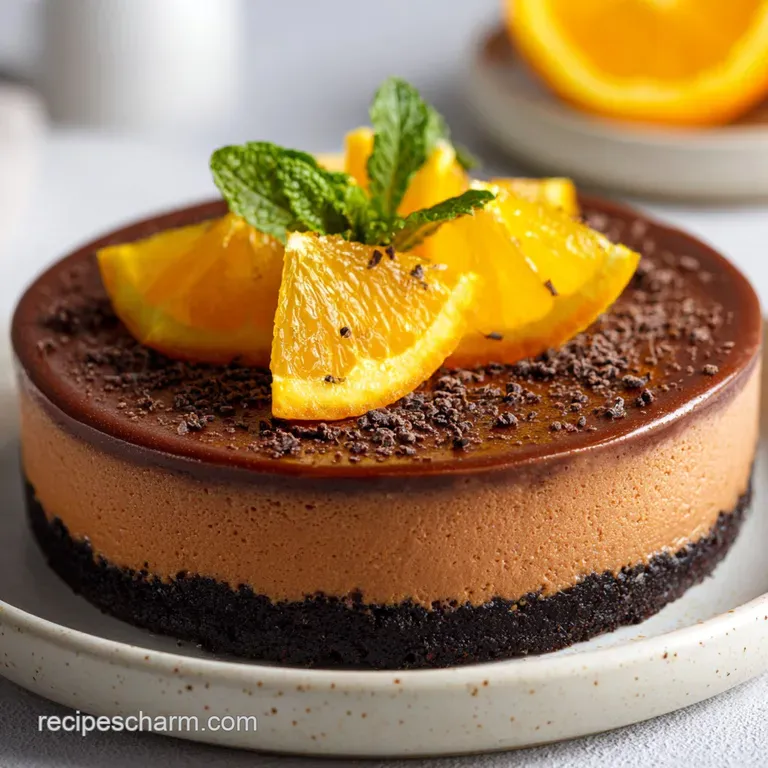
- Time: Active 30 minutes, Passive 10 hours 15 mins, Total 10 hours 45 mins
- Flavor/Texture Hook: A silken, orange infused center over a dark cookie crust that provides a satisfying shatter.
- Perfect for: Holiday centerpieces, birthday celebrations, or any viral worthy dinner party.
- The Ultimate Chocolate Orange Cheesecake
- Essential Recipe Specifications
- Sourcing the Finest Ingredients
- Tools for Professional Results
- Step-by-Step Crafting Guide
- Solving Common Baking Issues
- Customizing Your Flavor Profile
- Storing and Saving Scraps
- Styling for Viral Appeal
- Recipe FAQs
- 📝 Recipe Card
The Ultimate Chocolate Orange Cheesecake
Picture this: you walk into the kitchen and the air is thick with the scent of cold pressed orange oils and melting 70% cacao. It’s that specific, nostalgic aroma of a Terry’s Chocolate Orange being whacked against a table, but better.
The first time I tried making a Chocolate Orange Cheesecake, I was obsessed with getting that "Instagram worthy" clean slice. I remember standing by my oven with a flashlight, practically whispering to the batter, hoping it wouldn't rise and fall like a souffle. It did. It cracked.
It looked like a map of the Grand Canyon.
But that failure was the best thing that ever happened to my baking. I realized I was treating the ingredients like a science experiment instead of a texture building exercise. I learned that the secret isn't just in the orange zest, but in how those citrus oils interact with the fat in the cream cheese.
Now, when I pull this beauty out of the fridge, the ganache is so glossy you can see your reflection in it, and the center is so creamy it feels like silk. We aren't just making a dessert here, we're building a sensory experience that happens to look incredible on a plate.
You want that moment where the fork hits the plate and you hear the faint snap of the cookie base followed by the effortless glide through the filling. It’s about that color balance - the deep, dark obsidian of the crust against the pale, sunset orange tint of the cheesecake.
Trust me, once you see that first slice come out perfectly clean, you’ll be just as hooked as I am. Let's get into the details of how we make this happen without the stress.
Essential Recipe Specifications
Getting the timing and temperature right is the difference between a grainy mess and a masterpiece. Before we even touch a spatula, let's look at the benchmarks that define this Chocolate Orange Cheesecake.
| Method | Total Time | Texture | Best For |
|---|---|---|---|
| Classic Baked | 10 hours 45 mins | Velvety, dense, and rich | Special occasions & dinner parties |
| No Bake Prep | 6 hours 15 mins | Light, airy, and mousse like | Quick summer treats & beginners |
| Mini Pots | 4 hours 30 mins | Creamy with high crust ratio | Individual servings & kid parties |
The baked version we are focusing on today provides that structural integrity that makes it feel like a professional patisserie item. If you want that sharp, clean edge on every slice, the long chill time is non negotiable.
The Alchemy of Citrus and Cocoa
Terpene Extraction: Massaging the orange zest into the granulated sugar breaks down the fruit's cell walls, allowing the fragrant oils to permeate the entire cheesecake.
Fat Protein Bond: Using full fat Philadelphia cream cheese at room temperature ensures the fat molecules emulsify perfectly with the eggs, preventing a curdled or lumpy appearance.
| Thickness | Internal Temp | Rest Time | Visual Cue |
|---|---|---|---|
| 3 inches | 150°F (65°C) | 1 hour in oven | Slight jiggle in the center 2 inches |
| 2.5 inches | 148°F (64°C) | 1 hour in oven | Edges set and slightly puffed |
| Individual | 145°F (63°C) | 15 minutes | Top looks matte rather than shiny |
Getting the internal temperature to exactly 150°F (65°C) is my personal gold standard. It ensures the eggs have set the structure without overcooking the proteins, which is what usually causes those dreaded cracks.
Sourcing the Finest Ingredients
The quality of your cocoa and the ripeness of your oranges will dictate the final flavor profile. I always go for organic oranges because we are using so much of the zest - you want those pure oils without any waxy residue. If you find yourself craving another classic after this, you might enjoy the bold colors of my Red Velvet Cupcakes recipe, which shares that same focus on striking visual contrast.
Component Analysis
| Ingredient | Science Role | Pro Secret |
|---|---|---|
| Philadelphia Cream Cheese | Provides the structural base and lactic tang | Always use the silver blocks, never the tub variety |
| Dutch Process Cocoa | Lowers acidity and deepens the dark color | Sift it twice to avoid "cocoa clumps" in the batter |
| Dark Chocolate (60-70%) | Adds stability and a sophisticated bitter note | Melt it slowly to avoid scorching the delicate fats |
The Essentials and Substitutions
- 300g chocolate sandwich cookies: These create that dark, "shatter" texture for the base.
- Substitute: Chocolate digestive biscuits. Why this? They offer a more rustic, crumbly texture than sandwich cookies.
- 60g unsalted butter, melted: The "glue" for your crust.
- Substitute: Salted butter (omit the extra sea salt). Why this? Adds a savory depth to the chocolate base.
- 0.5 tsp sea salt: Enhances the chocolate and citrus.
- Substitute: Kosher salt. Why this? Provides a cleaner salt flavor without being overly sharp.
- 900g Philadelphia cream cheese: The heart of the Chocolate Orange Cheesecake.
- Substitute: Full fat Mascarpone (for a richer, milder taste). Why this? Creates an even more velvety mouthfeel but is more expensive.
- 200g granulated sugar: Sweetens and softens the cheese.
- Substitute: Caster sugar. Why this? Dissolves faster, reducing the risk of overbeating the batter.
- Zest of 2 large organic oranges: The primary flavor driver.
- Substitute: 1 tsp high-quality orange extract. Why this? Use only if fresh oranges are unavailable; the flavor is less complex.
- 30g unsweetened Dutch process cocoa powder: For that deep mahogany hue.
- Substitute: Natural cocoa powder. Why this? It's more acidic, so the cheesecake might be slightly tangier.
- 200g dark chocolate (60-70% cacao): Adds the "snap" and richness.
- Substitute: Milk chocolate. Why this? Results in a much sweeter, less "grown up" flavor profile.
- 4 large eggs: The binding agent.
- Substitute: Flax eggs (not recommended for this specific baked style). Why this? Eggs are vital for the structure in this classic bake.
- 1 tsp pure vanilla extract: Rounds out the aromatics.
- Substitute: Vanilla bean paste. Why this? Adds beautiful black speckles and a more intense bean flavor.
- 100g Terry's Chocolate Orange: For the viral worthy garnish.
- Substitute: Any orange infused chocolate bar. Why this? Maintains the flavor theme while allowing for different textures.
- 80ml heavy cream: For the glossy ganache.
- Substitute: Coconut cream (full fat). Why this? Adds a very subtle tropical note to the finish.
Tools for Professional Results
You don't need a bakery full of gear, but a few specific items will make your life significantly easier. Using a springform pan is non negotiable here unless you want to eat your cheesecake directly out of a deep dish with a spoon (which, honestly, I've done on a Tuesday night).
- 9 inch Springform Pan: Essential for releasing the cheesecake without destroying the edges.
- Stand Mixer: Using the paddle attachment prevents too much air from being whipped into the batter.
- Microplane Zester: You want a fine zest that disappears into the cream, not long stringy bits.
- Large Roasting Pan: To act as the water bath (bain marie) for a crack free finish.
- Offset Spatula: For getting that "viral worthy" smooth top before the ganache goes on.
- Heavy Duty Foil: To wrap the bottom of the pan and prevent water from seeping in.
Chef's Tip: Before you start, wrap your springform pan in two layers of extra wide, heavy duty aluminum foil. Then, place it inside a slow cooker liner or a silicone pan protector. This "belt and suspenders" approach is the only way I've found to 100% guarantee no water leaks into that beautiful cookie crust.
step-by-step Crafting Guide
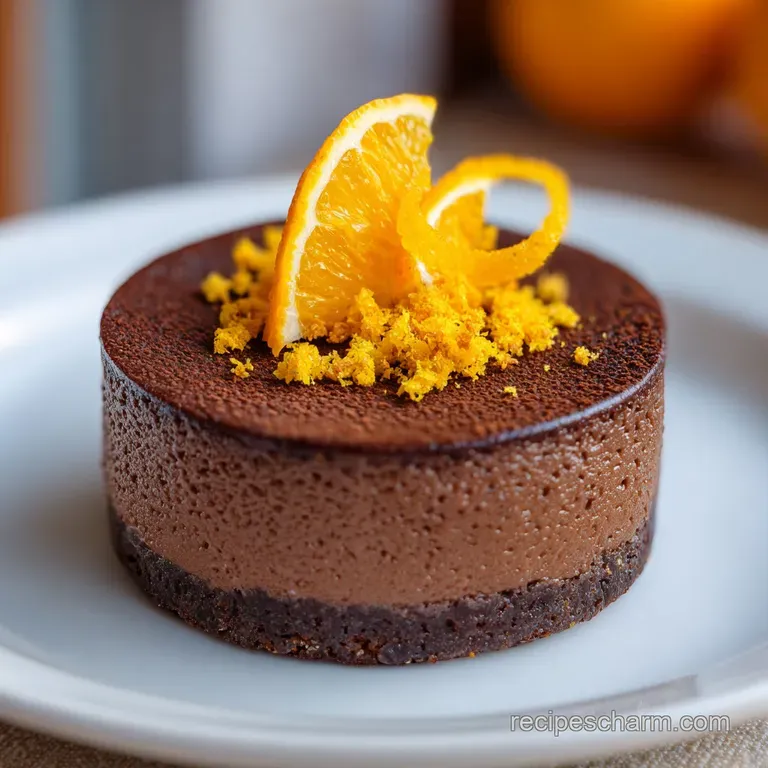
The process of making a Chocolate Orange Cheesecake is all about patience. We are building layers of flavor and texture, starting with a base that needs to be firm enough to hold the weight of nearly a kilogram of cream cheese.
1. To Build a Structural Base
Preheat your oven to 350°F (180°C). Pulse the 300g of chocolate cookies in a food processor until they look like fine sand. Mix with 60g of melted butter and 0.5 tsp sea salt. Press this mixture firmly into the bottom of your 9 inch springform pan.
I like to use the flat bottom of a measuring cup to get a perfectly level surface. Bake for 10 minutes until the crust smells toasted and set. Let it cool completely while you prep the filling.
2. To Emulsify the Perfect Filling
In your stand mixer, combine the 900g of room temperature cream cheese and 200g of granulated sugar. Add the zest of 2 oranges. Beat on medium low speed until the mixture is silken and no lumps remain.
Note: Massaging the zest into the sugar before adding the cheese releases even more oil.
3. To Achieve a Faultless Bake
Sift in the 30g of cocoa powder and pour in the 200g of melted (and cooled) dark chocolate. Mix until combined. Add the 4 eggs one at a time, mixing on the lowest speed just until the yellow streaks disappear. Pour the batter over the crust.
Place the pan in a roasting dish and fill the dish with boiling water halfway up the sides of the cheesecake pan. Bake for 1 hour 15 mins until the edges are set but the center still jiggles slightly.
4. To Create the Mirror Like Ganache
Once the cheesecake has cooled in the oven (with the door cracked) for an hour, and then chilled in the fridge for at least 8 hours, it's time for the topping. Heat 80ml of heavy cream until just simmering, then pour it over 100g of chopped Terry's Chocolate Orange.
Let it sit for 2 minutes, then stir gently until the ganache is glossy and pourable. Pour this over the chilled cake and let it drip down the sides for that aesthetic, viral look.
Solving Common Baking Issues
Even the most seasoned bakers run into trouble with cheesecakes. The key is knowing how to pivot. If you're used to recipes that don't require a water bath, you might find my Banana Pudding Cheesecake Recipe helpful for understanding different structural needs.
Why Your Cheesecake Sunk
A sunken center usually means you've whipped too much air into the batter. When the air bubbles heat up, they expand, causing the cake to rise like a balloon. Once it cools, the air escapes, and the structure collapses. Always use the lowest speed on your mixer once you start adding eggs.
Why Your Cheesecake is Grainy
Graininess is almost always caused by cold ingredients. If the cream cheese is even slightly chilled, it won't emulsify with the sugar and fats, resulting in tiny "beads" of cheese throughout the bake.
| Problem | Root Cause | Solution |
|---|---|---|
| Surface Cracks | Sudden temperature drop or overbaking | Leave the cake in the oven with the door cracked for 1 hour after turning it off. |
| Soggy Crust | Water bath leaked into the pan | Use a silicone protector or double wrap with heavy duty foil. |
| Lumpy Batter | Cream cheese was too cold | Let cheese sit at room temperature for at least 4 hours before mixing. |
Common Mistakes Checklist
- ✓ Never skip the water bath; the steam keeps the surface hydrated and prevents cracking.
- ✓ Don't open the oven door during the first 60 minutes of baking.
- ✓ Always use full fat cream cheese; low-fat versions contain more water and will result in a weeping cake.
- ✓ Ensure the melted chocolate is cooled to room temperature before adding to the cheese; otherwise, it will "cook" the batter prematurely.
- ✓ Use a hot, wet knife to slice the cake, wiping it clean between every single cut for those professional edges.
Customizing Your Flavor Profile
If you want to scale this recipe, it's fairly straightforward. For a smaller 6 inch cake, you can halve the ingredients, but you'll need to reduce the bake time by about 20 minutes.
If you are doubling it for a massive party, I highly recommend baking in two separate 9 inch pans rather than one giant one to ensure the center cooks through without burning the edges.
For a White Chocolate Twist
You can swap the dark chocolate for high-quality white chocolate and use white chocolate sandwich cookies for the base. This creates a "Creamsicle" vibe that is visually very different but equally stunning. Keep in mind that white chocolate is much sweeter, so you might want to reduce the granulated sugar by 50g.
Decision Shortcut
- If you want a Deep & Moody vibe: Use 80% cacao chocolate and extra cocoa powder in the crust.
- If you want a Bright & Refreshing vibe: Add a tablespoon of fresh orange juice to the batter and double the zest.
- If you want a Crunchy Texture: Fold chopped chocolate covered honeycomb into the batter before baking.
Storing and Saving Scraps
This Chocolate Orange Cheesecake is a champion in the fridge. In fact, I think it tastes significantly better on day three because the orange flavor has time to permeate the dense cheese.
- Fridge: Store in an airtight container for up to 5 days.
- Freezer: Wrap individual slices in plastic wrap and then foil. They will stay fresh for up to 3 months. Thaw in the fridge overnight never at room temperature, or the ganache will sweat.
- Zero Waste Tip: If you have leftover crust crumbs or a slice that didn't come out perfectly, crumble it into a bowl and roll it into "Cheesecake Truffles." Dip them in melted chocolate for a second, bite sized dessert that looks intentionally gourmet. You can also save the orange peels to make candied zest for future garnishes.
Styling for Viral Appeal
To get that "Instagram worthy" look, color balance is everything. We want to play with the three distinct layers of color to make the dish pop. If you're looking for another fruit forward dessert that photographs beautifully, my Chocolate Covered Strawberries recipe is a fantastic companion piece for a dessert table.
Color Accent Strategy
- Deep Cocoa: The ganache and crust provide a dark frame for the lighter filling.
- Vibrant Orange: Use fresh, bright orange zest across the top right before serving so it doesn't dry out or turn brown.
- Gold Highlights: Use the gold foil wrappers from the Terry's Chocolate Orange or even a touch of edible gold leaf to catch the light.
Myth: Searing the surface of the cheesecake with a torch adds flavor. Actually, the high sugar content in cheesecake means it burns before it caramelizes in a pleasant way. If you want a toasted flavor, stick to a burnt basque style recipe instead.
Myth: You must use a springform pan for all cheesecakes. While it makes life easier, you can line a standard cake tin with parchment paper "slings" that allow you to lift the cake out once it is fully chilled and firm.
Myth: Cracks are only caused by overcooking. Cracks can also happen if the cheesecake "sticks" to the side of the pan as it shrinks during cooling. Always run a thin knife around the edge of the cake immediately after taking it out of the oven to release it from the sides.
Recipe FAQs
Can I skip the water bath (bain marie) when baking this cheesecake?
No, absolutely not for this style. The steam creates a humid environment that bakes the filling gently, preventing the proteins from setting too fast and causing cracks.
What is the ideal internal temperature for a fully set Chocolate Orange Cheesecake?
Aim for 150°F (65°C) in the center. This ensures the eggs are safely cooked and the structure is set, but the filling remains velvety smooth when chilled.
How do I prevent the cream cheese filling from turning grainy?
Ensure all dairy ingredients are fully at room temperature. Cold cream cheese will not properly emulsify with the sugar and fats, leading to a distinctively lumpy or grainy texture.
How long must the cheesecake chill before I can apply the ganache topping?
Chill for a minimum of 8 hours, ideally overnight. A fully chilled cake prevents the warm ganache from melting or cracking the set surface structure.
Is it true that over beating the batter causes cheesecake cracks?
Yes, excessive beating introduces too much air. As this air heats up and then cools, the structure deflates unevenly, leading to surface fissures.
What is the best way to release the cheesecake from the springform pan cleanly?
Run a thin, hot knife around the edge immediately after baking. This releases the cake from the sides while it is still slightly expanded, preventing sticking as it cools.
Can I substitute the dark chocolate with milk chocolate for a sweeter flavor?
No, substitute carefully as milk chocolate lacks structural cocoa solids. It will result in a much sweeter cake that may not set as firmly; if you must substitute, consider using it only in the ganache topping.
Chocolate Orange Cheesecake Bake
Ingredients:
Instructions:
Nutrition Facts:
| Calories | 670 kcal |
|---|---|
| Protein | 10.9 g |
| Fat | 48.3 g |
| Carbs | 51.0 g |
| Fiber | 3.3 g |
| Sugar | 37.5 g |
| Sodium | 316 mg |
