Roasted Tomato Soup: Simple and Delicious
- Time: Active 15 minutes, Passive 45 minutes, Total 60 minutes
- Flavor/Texture Hook: Silky, smoky, and naturally sweet
- Perfect for: Stress free family dinners and healthy meal prep
- The Simple and Delicious Easy Roasted Tomato Soup Recipe
- Roasting Creates Much Deeper Flavor
- Component Analysis and Pro Secrets
- Comprehensive Ingredient and Shopping List
- Necessary Tools for Minimal Cleanup
- Detailed Step by Step Instructions
- Fixing Common Texture Issues
- Adjusting Quantities for Every Occasion
- Debunking Traditional Soup Folklore
- Preserving Leftovers and Reducing Waste
- Serving Ideas for Complete Meals
- Recipe FAQs
- 📝 Recipe Card
The Simple and Delicious Easy Roasted Tomato Soup Recipe
Forget everything you have been told about needing a heavy stockpot and a four hour window to make a decent soup. Most people assume that a deep, complex flavor requires a long, slow simmer on the stove, but that is actually a common myth that keeps busy cooks away from homemade starters.
The truth is that the oven does all the heavy lifting for you, transforming watery vegetables into a concentrated, sweet essence that tastes like it has been cooking since dawn. This article shares one amazing recipe for simple and delicious easy roasted tomato soup.
I still remember the first time I realized how much better roasting was than boiling. I had a basket of sad, slightly wrinkled plum tomatoes and absolutely no patience to stand over a burner.
I tossed them on a tray with some garlic, walked away to fold laundry, and came back to a kitchen that smelled like a high end Italian bistro. The tomatoes had slumped into little puddles of concentrated joy, their skins charred just enough to add a hint of smoke to the room.
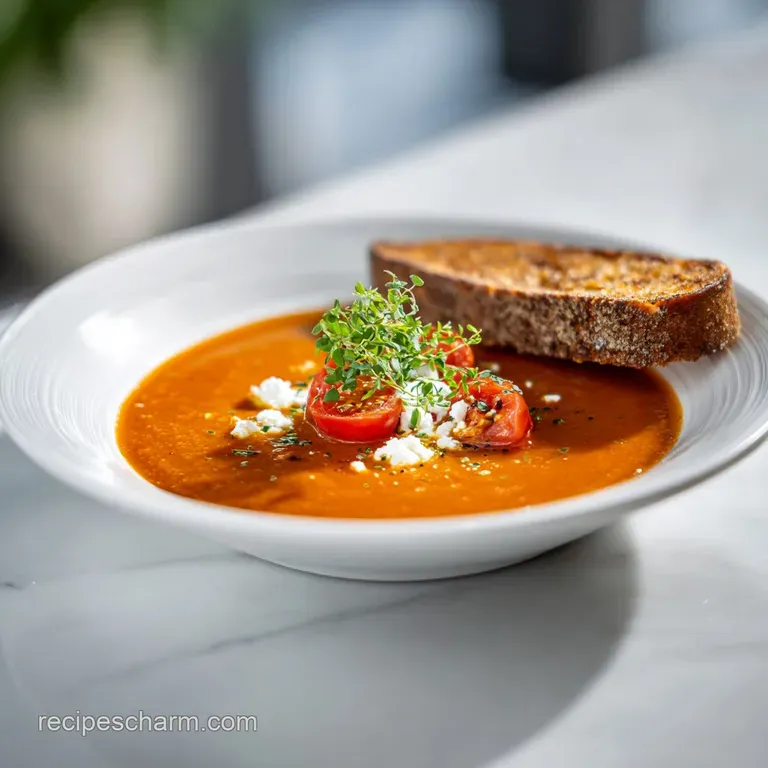
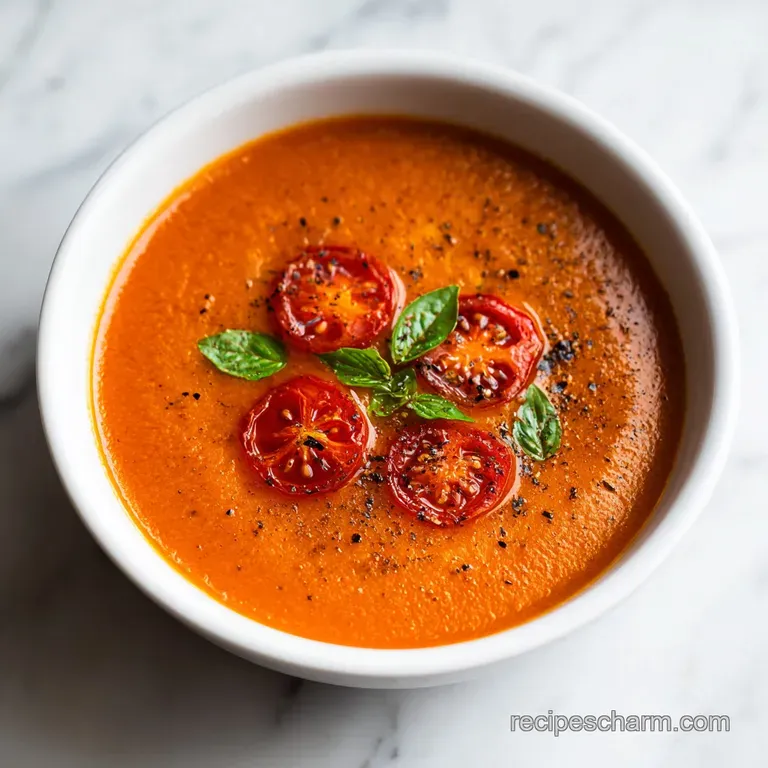
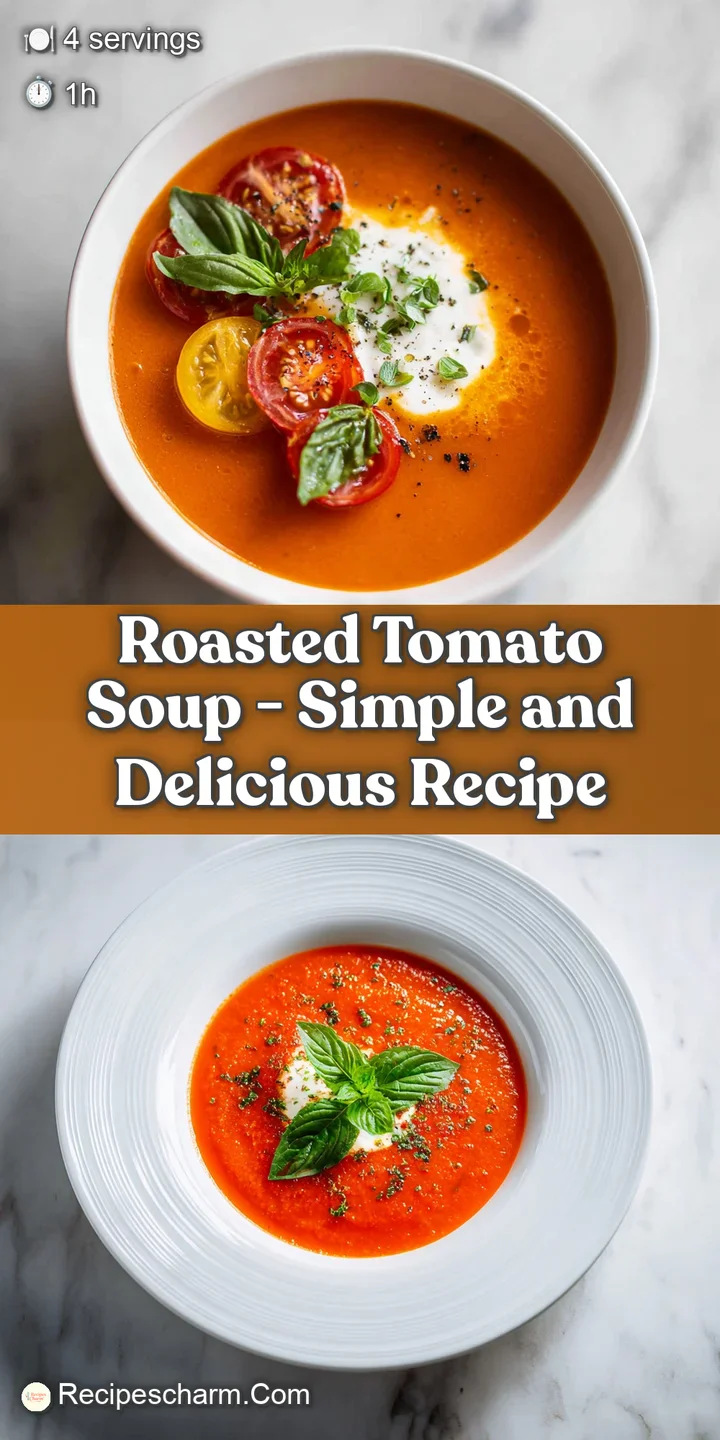
We are going for a texture that is truly velvety, not that thin, tinny liquid you get from a can. You can expect a vibrant orange hue and a richness that feels indulgent even though we aren't relying on a tub of heavy cream to get us there.
It is the kind of hearty meal that makes a rainy Tuesday feel like a special occasion, and because it is a one pan prep, you won't be scrubbing the stove until midnight.
Roasting Creates Much Deeper Flavor
Maillard Concentration: The dry heat of the oven evaporates water from the tomatoes, concentrating their natural sugars and acids into a more intense flavor profile.
Allium Transformation: Roasting whole garlic cloves in their skins or tucked under tomatoes prevents burning while turning the sharp, pungent bite into a mellow, buttery sweetness.
Pectin Release: High heat breaks down the cellular structure of the red bell pepper, releasing natural pectins that act as a thickener when blended, creating a silky mouthfeel.
Caramelized Aromatics: The edges of the yellow onions brown and crisp, adding a savory "umami" base that mimics the effect of a long simmered vegetable stock.
| Char Level | Oven Time | Visual Cue | Flavor Profile |
|---|---|---|---|
| Light Roast | 35 minutes | Tomatoes are soft, skins intact | Bright, acidic, and fresh |
| Standard Roast | 45 minutes | Skins wrinkled, some black spots | Balanced, sweet, and rich |
| Deep Roast | 55 minutes | Significant char on peppers/onions | Smoky, jammy, and very dark |
Choosing the right roast level depends entirely on your personal preference. I usually aim for that 45 minute mark because it provides the best balance between the natural tang of the fruit and the smoky notes from the charred skins.
If you go too short, the soup can feel a bit thin; go too long, and the garlic might start to turn bitter, so keep a close eye on the tray during those final ten minutes of cooking.
Component Analysis and Pro Secrets
| Ingredient | Science Role | Pro Secret |
|---|---|---|
| Plum Tomatoes | Primary Acid/Sugar | Leave the seeds in for extra pectin and "tomatoey" punch |
| Red Bell Pepper | Flavor Bridge | Roast skin side up to get that lovely smoky char |
| Balsamic Vinegar | pH Balancer | Add it at the very end to keep the brightness from evaporating |
| Fresh Basil | Volatile Oil Source | Blending the leaves while the soup is warm releases maximum aroma |
Comprehensive Ingredient and Shopping List
For this recipe, we are keeping things simple but specific. You will need 3 lbs (1.36 kg) of Plum or Roma tomatoes. These are the workhorses of the tomato world because they have less water and more "meat" than beefsteak varieties, which means your soup will be thick rather than watery.
Grab 1 large red bell pepper to add a subtle sweetness and that beautiful orange glow.
For the aromatic base, you need 1 medium yellow onion and 6 cloves of garlic. Don't be tempted to use the pre peeled stuff in a jar; the cloves need to be fresh to survive the 400°F (200°C) oven without becoming acrid.
You will also need 3 tbsp of extra virgin olive oil to help the roasting process, along with 1 tsp sea salt, 1/2 tsp cracked black pepper, and 1/2 tsp smoked paprika for that "cooked over an open fire" vibe.
| Original Ingredient | Substitute | Why It Works |
|---|---|---|
| Plum Tomatoes | Canned Whole San Marzano | Use 2 large cans drained. Note: Lacks the fresh roasted skin flavor |
| Red Bell Pepper | Jarred Roasted Peppers | Adds similar sweetness. Note: Skip the roasting step for the pepper |
| Yellow Onion | Shallots | Adds a more delicate, garlicky sweet flavor profile |
| Balsamic Vinegar | Lemon Juice | Provides the necessary acid but without the dark color |
| Vegetable Broth | Chicken Bone Broth | Adds more protein and a savory, silky depth |
| Fresh Basil | Fresh Oregano | Offers a more earthy, Mediterranean herb profile |
Necessary Tools for Minimal Cleanup
We are staying true to the promise of minimal tools here. You really only need three main items: a large rimmed baking sheet (standard half sheet size), a high speed blender, and a large pot or Dutch oven just for keeping things warm at the end.
I prefer a heavy baking sheet because it distributes the heat evenly, which prevents the onions from burning while the tomatoes are still struggling to soften.
If you don't have a high speed blender, a standard one works, but you might need to blend in smaller batches and run it for a bit longer to achieve that velvety texture. An immersion blender is another option if you want to blend directly in the pot, but honestly, for the smoothest result, a traditional blender jar is king.
It pulls everything down into the blades and incorporates air for a lighter, creamier finish.
Detailed step-by-step Instructions
- Preheat the oven to 400°F (200°C). Arrange the 3 lbs of halved tomatoes (cut side up), 1 quartered bell pepper, thick onion wedges, and 6 peeled garlic cloves on a large rimmed baking sheet.
- Drizzle the vegetables with 3 tbsp of extra virgin olive oil. Sprinkle evenly with 1 tsp sea salt, 1/2 tsp cracked black pepper, and 1/2 tsp smoked paprika.
- Roast the tray for 40-45 minutes until the tomato skins are wrinkled and slightly charred. You want to see those dark edges on the onions; that is where the flavor lives.
- Transfer the roasted vegetables and all the accumulated juices into a high speed blender. Be careful here, as the steam will be intense.
- Deglaze the pan with a splash of the 2 cups of broth if there are browned bits stuck to the surface. Scrape them up and add them to the blender.
- Add the remaining broth, 1/2 cup fresh basil leaves, and 1 tbsp balsamic vinegar to the blender jar.
- Secure the lid tightly and blend on high until the soup reaches a velvety consistency. Note: Start on low speed to avoid a "steam explosion" popping the lid off.
- Pour the mixture into a large pot to keep warm. Taste the soup and adjust with more salt or a teaspoon of honey if the tomatoes were particularly acidic.
Fixing Common Texture Issues
Sometimes things don't go exactly as planned in the kitchen, and that is okay. The most common issue people face is a soup that feels a bit "grainy" or "pulpy." This usually happens if the tomato skins didn't break down entirely or if the blender wasn't powerful enough.
Another common gripe is a soup that tastes a bit too tart, which often depends on the ripeness of your tomatoes.
Correcting Bitter or Acidic Tones
If your soup has a sharp, metallic, or overly acidic bite, it is usually because the tomatoes weren't quite ripe enough or the balsamic was very strong. A tiny pinch of baking soda can neutralize excess acid, but the better way is to add a small amount of fat or sugar.
A teaspoon of honey or a swirl of heavy cream (if you aren't keeping it dairy-free) usually rounds out those sharp edges and makes the flavors sing.
| Problem | Root Cause | Solution |
|---|---|---|
| Grainy Texture | Blender speed too low | Blend on high for a full 60 seconds or strain through a mesh sieve |
| Watery Soup | Tomatoes were too juicy | Simmer on the stove uncovered for 10 minutes to reduce |
| Bitter Aftertaste | Burned garlic | Add a teaspoon of honey or sugar to balance the bitterness |
Common Mistakes Checklist
- ✓ Never crowd the baking sheet; if vegetables are piled on top of each other, they will steam rather than roast.
- ✓ Don't peel the tomatoes before roasting; the skins provide flavor and body that you don't want to lose.
- ✓ Always use a rimmed baking sheet to catch the juices, as those liquids are pure flavor gold.
- ✓ Wait to add the fresh basil until the blending stage so the heat doesn't turn the herb bitter and brown.
- ✓ Ensure the blender lid is vented slightly if your model allows it, or hold it down with a heavy kitchen towel.
Adjusting Quantities for Every Occasion
If you are cooking for a crowd or trying to fill up the freezer, you can easily double this recipe. However, don't just double everything blindly. When you scale up, the cooking time usually increases because the oven has to work harder to remove moisture from a crowded space.
I recommend using two separate baking sheets and swapping their positions halfway through the 45 minutes to ensure even browning.
When it comes to seasoning, spices like salt and smoked paprika don't always need to be doubled exactly. Start with 1.5 times the amount and taste as you go. Liquids like broth can also be tricky; if you add too much, you lose that thick, comforting texture. If you find yourself enjoying this kind of meal prep, you might also like my Lentil Soup recipe which is another fantastic batch cook option for busy weeks.
Debunking Traditional Soup Folklore
One of the biggest pieces of kitchen fiction is that you must "deseed" tomatoes to get a smooth soup. In reality, the seeds and the jelly surrounding them contain a massive amount of glutamic acid, which provides that savory umami flavor we all crave.
By using a high speed blender, those seeds disappear into the texture entirely, so you get all the flavor without any of the work.
Another myth is that you need to peel the red pepper. While some recipes suggest charring the pepper and steaming it in a bag to slip the skin off, it is a messy, unnecessary step for a blended soup. The skins roast perfectly fine and add a lovely rustic note to the final blend.
As long as you have a decent blender, those skins will be pulverized into nothingness, leaving only flavor behind.
| Comparison | Oven Roasting | Stovetop Simmering |
|---|---|---|
| Flavor Profile | Sweet, charred, concentrated | Fresh, lighter, more acidic |
| Hands on Time | 15 minutes | 30+ minutes (stirring) |
| Texture | Naturally thick/velvety | Often thinner or needs starch |
Preserving Leftovers and Reducing Waste
This soup is a dream for leftovers because the flavors actually continue to meld as it sits. In the fridge, it will stay fresh in an airtight container for up to 4 days. If you notice it has thickened up too much after chilling, just add a tablespoon of water or broth when you reheat it on the stove.
For longer storage, this recipe freezes beautifully for up to 3 months; just leave an inch of space at the top of your jar or container to allow for expansion.
Zero waste is easy with a recipe like this. If you have leftover stems from the basil, don't toss them! You can throw them into a freezer bag with other veggie scraps like onion skins or the ends of the bell pepper to make your own homemade broth later.
If you have a half empty jar of pesto in the fridge, a dollop of that on top of a reheated bowl is a fantastic way to use it up.
Serving Ideas for Complete Meals
While a bowl of this soup is great on its own, it really shines when paired with something crunchy. The classic choice is a grilled cheese sandwich, but I like to make it a bit heartier.
A thick slice of sourdough rubbed with a raw garlic clove and toasted with a bit of fontina or sharp cheddar is the ultimate dipping vessel. The acidity of the soup cuts right through the richness of the cheese.
If you want a more substantial family dinner, you can serve this as a starter followed by something like a Chicken and Peppers recipe to keep the Mediterranean theme going. For a lighter touch, a handful of crispy chickpeas or a swirl of Greek yogurt on top adds protein without making the meal feel heavy. Right then, you have everything you need to turn a few basic vegetables into a meal that tastes like you spent all day in the kitchen, even though the oven did the hard work. Let's crack on and get those tomatoes roasting!
Recipe FAQs
Is it true I need a four hour window to develop complex soup flavors?
No, this is a common misconception. The high heat roasting method concentrates sugars and creates depth in just 45 minutes of oven time, delivering a richer result than a long, slow stovetop simmer.
How to ensure the soup texture is velvety smooth?
Blend on high speed until completely uniform. Using a high speed blender ensures the tomato skins and roasted vegetables emulsify into a silky, cohesive liquid without any chunky bits.
Can I prepare the ingredients ahead of time?
Yes, you can roast the vegetables up to 2 days in advance. Simply store the roasted mixture in an airtight container in the refrigerator and blend it with your broth and basil when you are ready to serve.
How to balance the acidity of the tomatoes?
Add a teaspoon of honey during the final seasoning stage. If you enjoyed mastering this flavor balancing technique here, you will find it equally useful for adjusting the richness in other savory dishes.
Is it necessary to peel the tomatoes before roasting?
How to get the most flavor out of the roasted vegetables?
Use a splash of broth to scrape up the caramelized bits from the baking sheet. These browned bits, or fond, contain concentrated flavors that significantly enhance the soup's overall intensity.
Should I use fresh or canned tomatoes for this recipe?
Stick with fresh plum or Roma tomatoes. Their lower water content and higher flesh-to-seed ratio are essential for achieving the intense, roasted flavor profile that defines this dish.
Easy Roasted Tomato Soup
Ingredients:
Instructions:
Nutrition Facts:
| Calories | 195 kcal |
|---|---|
| Protein | 4.4 g |
| Fat | 11.6 g |
| Carbs | 22.3 g |
| Fiber | 4.8 g |
| Sugar | 12.2 g |
| Sodium | 715 mg |
