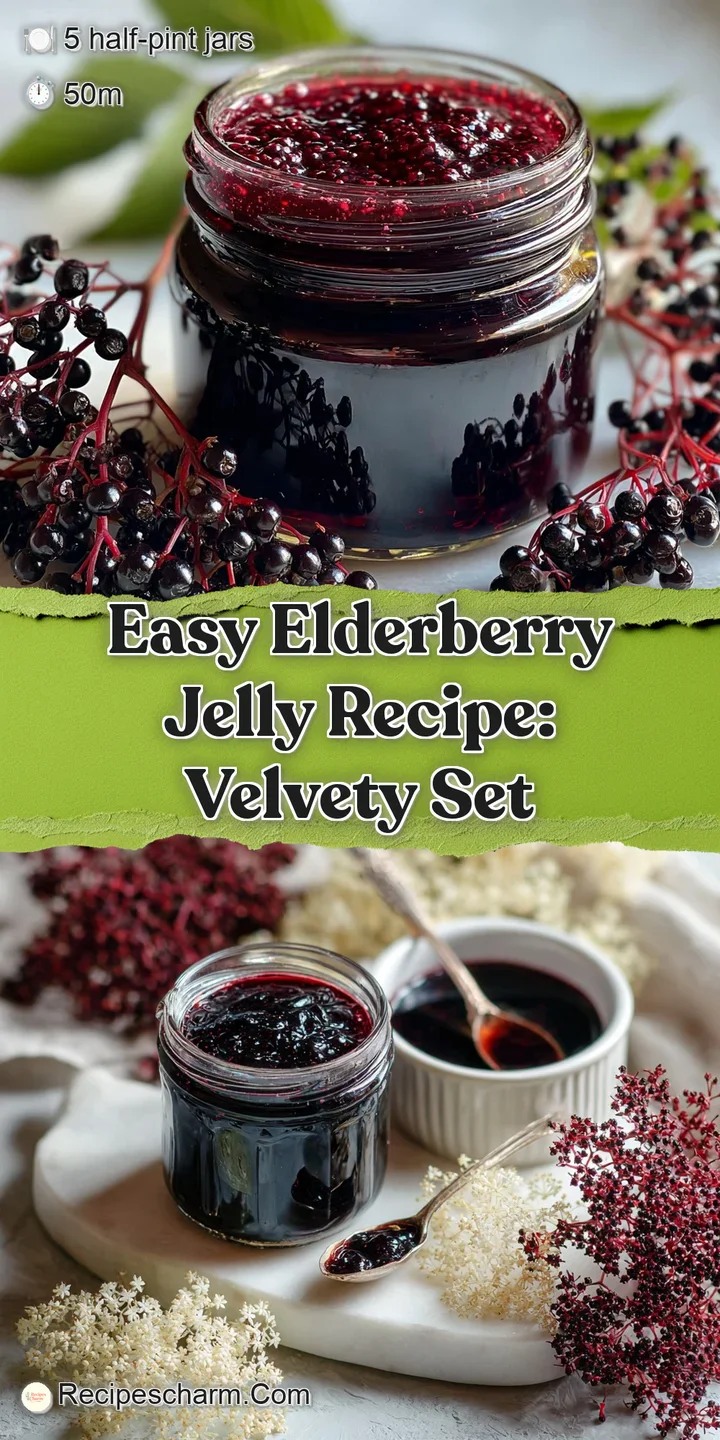
Elderberry Jelly Recipe: Ruby Red Preserve
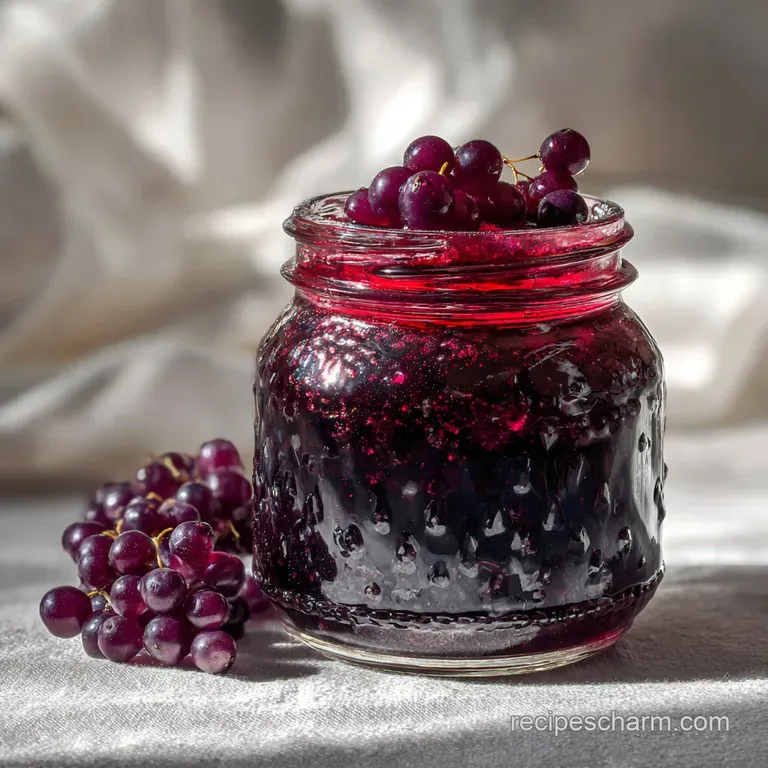
- Time: Active 20 minutes, Passive 30 minutes, Total 50 minutes
- Flavor/Texture Hook: A velvety, semi firm set with a bright, forest berry tang
- Perfect for: Weekend preserving, holiday gifting, or a hearty family breakfast
- Making a Vibrant Homemade Elderberry Jelly Recipe from Scratch
- Essential Specs for Success with Small Batch Preserves
- Component Analysis of Every Ingredient in This Pot
- Minimal Kitchen Tools Required for Fruit Juice Extraction
- Step by Step Guide from Simmering to Sealing
- Avoiding Common Pitfalls and Troubleshooting Your Jam Set
- Creative Ways to Customize Your Wild Berry Jellies
- Keeping Your Preserves Fresh with Smart Storage Methods
- Hearty Family Pairings for Your Finished Fruit Spread
- Recipe FAQs
- 📝 Recipe Card
Making a Vibrant Homemade Elderberry Jelly Recipe from Scratch
The first time I hauled a bucket of elderberries into my kitchen, my hands looked like I’d been tattooing grapes for eight hours. That deep, midnight purple juice stains everything it touches, but the aroma that wild, floral, slightly musky scent hitting the steam is exactly why we do this.
I remember standing over the pot, watching the berries burst and release their ink, realizing that the best things in life aren't found in a grocery aisle; they’re found hanging off a dusty hedge on a Tuesday afternoon.
We aren't going for those overly sweet, translucent blobs you see in the store. This elderberry jelly recipe is about capturing the soul of the berry. It’s rich, it’s slightly tannic, and when you swipe a spoonful onto a warm biscuit, it feels like you've bottled a piece of the late summer landscape.
Don't worry about needing a chemistry degree or a basement full of specialized gear; we’re keeping this simple and reliable so you can get back to your family dinner without a sticky floor.
Honestly, the trick to a great jelly isn't more sugar it's more patience during the strain. I’ve made the mistake of squeezing the cheesecloth because I was in a rush, and let’s just say cloudy jelly tastes the same but looks like mud.
If you want that jewel toned sparkle that catches the morning light, let gravity do the heavy lifting while you're busy doing literally anything else.
Essential Specs for Success with Small Batch Preserves
The Physics of the Pectin Bond: Low methoxyl pectin relies on a reaction with calcium ions rather than high sugar concentrations to create a structural web. This allows the liquid to transform into a gel like state even when we keep the sugar levels modest.
- Molecular Mesh: The pectin molecules form a three dimensional network that traps the berry juice, creating that signature "jiggle" without the graininess of over boiled sugar.
- Acidity Balance: Lemon juice isn't just for flavor; it lowers the pH, which is critical for the pectin to bond properly and ensures the preserve stays shelf stable.
- Thermal Stability: A brief, hard boil ensures the calcium water and pectin are fully integrated, preventing the jelly from "weeping" liquid later on.
- Flavor Retention: By using a shorter boil time, we prevent the volatile aromatic compounds of the berries from evaporating, keeping the taste fresh and wild.
| Extraction Method | Time | Texture | Best For |
|---|---|---|---|
| Stovetop Simmer | 20 mins | Deep, extracted flavor | Maximum juice yield |
| Oven Roasting | 40 mins | Concentrated, roasted notes | High pectin fruits |
| Cold Pressing | 12 hours | Bright, raw fruit taste | Syrups and cordials |
While the berries are slowly releasing their nectar, I usually find time to prep something savory. If you’re looking for a quick meal to balance out all this sweetness, my Branzino Fillet Recipe is a fantastic 20 minute option that keeps the kitchen flow moving.
Component Analysis of Every Ingredient in This Pot
| Ingredient | Science Role | Pro Secret |
|---|---|---|
| Elderberries (1.36 kg) | Flavor & Pectin Base | Use only fully ripe, dark berries to avoid a bitter, grassy aftertaste. |
| Calcium Water (2 tsp) | Gelling Activator | Mix the powder thoroughly with water before adding to the pot to prevent clumping. |
| Lemon Juice (60 ml) | pH Regulator | Freshly squeezed juice provides more consistent acidity than the bottled stuff. |
| Low Sugar Pectin (50 g) | Structural Binder | Whisk this into the sugar first to ensure it disperses evenly in the hot juice. |
- 3 lbs (1.36 kg) Fresh Elderberries: Cleaned and de stemmed. Why this? Fresh berries provide the best flavor profile and natural acidity for a set.
- Substitute: 2 lbs (900g) frozen elderberries. (Works perfectly; just thaw them slightly first.)
- 3 cups (710 ml) Filtered Water: To help extract the juice. Why this? Pure water ensures no mineral interference with the pectin's delicate chemical bonding.
- Substitute: Unsweetened apple juice. (Adds a subtle sweetness and extra natural pectin.)
- 1.5 cups (300 g) Organic Cane Sugar: To balance the tartness. Why this? Provides sweetness without the chemical aftertaste of some alternative sweeteners.
- Substitute: 1 cup (340 g) honey. Note: Will result in a softer set and a distinct floral honey flavor.
- 1.75 oz (50 g) Low Sugar Pectin: To ensure a reliable set. Why this? Designed specifically to work with less sugar, keeping the fruit the star.
- Substitute: Regular pectin. Note: You must double the sugar to 3 cups for it to set.
- 1/4 cup (60 ml) Fresh Lemon Juice: For brightness and safety. Why this? Essential for reaching the proper pH level for long term preservation.
- Substitute: 1/4 cup (60 ml) lime juice. (Adds a slightly more tropical, zesty note.)
- 2 tsp Calcium Water: The catalyst for the pectin. Why this? It works in tandem with low sugar pectin to create a firm, velvety texture.
Minimal Kitchen Tools Required for Fruit Juice Extraction
We are keeping the equipment list lean because no one wants a mountain of dishes. You'll need a large, heavy bottomed pot think stainless steel or enameled cast iron to prevent the juice from scorching.
A fine mesh sieve or a double layer of cheesecloth is non negotiable for getting that clear, jewel like finish.
For the jarring process, a simple wide mouth funnel will save your countertops from purple stains, and a pair of jar lifters is a safety must. If you don't have a dedicated canning rack, a folded kitchen towel at the bottom of your largest pot works just as well to keep the jars from rattling against the heat source.
Trust me, I've used the "towel method" more times than I can count when I couldn't find my rack in the pantry chaos.
Chef's Tip
Freeze two small metal spoons before you start. When you think the jelly is done, drop a small bit onto the frozen spoon. If it wrinkles when you push it with your finger after 30 seconds, it’s ready. If it’s still runny, give it another 2 minutes of boiling.
step-by-step Guide from Simmering to Sealing
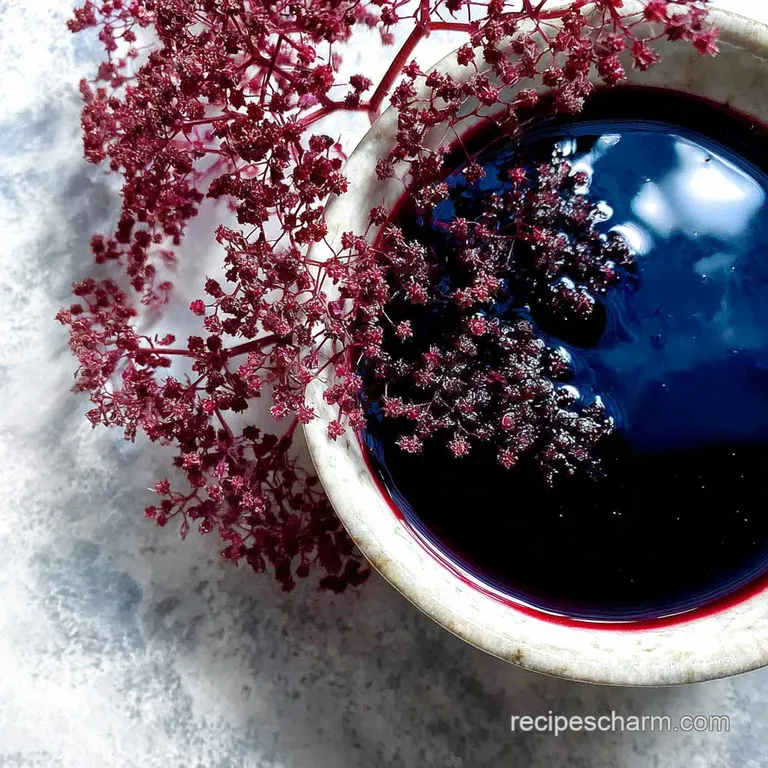
1. The Gentle Extraction
Place your 3 lbs (1.36 kg) of cleaned elderberries and 3 cups (710 ml) of water into your large pot. Bring to a simmer over medium heat and use a potato masher to gently crush the berries as they soften.
Let them cook for about 15 minutes until the berries look pale and the liquid is a deep, dark purple.
2. The Gravity Strain
Pour the mixture through a fine mesh sieve or cheesecloth lined colander into a large bowl. Let it sit for at least 2 hours, or overnight in the fridge if you have the time. Do not squeeze the solids if you want your elderberry jelly recipe to be crystal clear.
Note: Squeezing forces pulp through the mesh, resulting in a cloudy appearance.
3. The Low Sugar Boil
Measure out 3 cups of your strained elderberry juice and pour it back into a clean pot. Stir in 1/4 cup (60 ml) of lemon juice and 2 tsp of calcium water. In a separate small bowl, whisk together 1.5 cups (300 g) of sugar and 1.75 oz (50 g) of low sugar pectin until the powder is completely incorporated into the sugar.
Note: This prevents the pectin from clumping into "fish eyes" when it hits the liquid.
4. The "Sheeting" Test & Jarring
Bring the juice to a full rolling boil (one that can't be stirred down). Add the sugar pectin mixture and stir vigorously. Boil hard for exactly 2 minutes until the liquid coats the back of a spoon in a thick, velvety layer.
Remove from heat and skim off any foam that has risen to the top with a cold metal spoon.
5. The Water Bath Finish
Ladle the hot jelly into 5 sterilized half pint jars, leaving about 1 cm of headspace at the top. Wipe the rims clean, apply the lids, and process in a boiling water bath for 10 minutes. Carefully remove the jars and let them sit undisturbed for 24 hours.
You’ll hear that satisfying "pop" as they seal that’s the sound of success.
Avoiding Common Pitfalls and Troubleshooting Your Jam Set
Why Your Jelly Stays Liquid
Sometimes, despite our best efforts, the jelly refuses to firm up. This usually happens if the fruit was exceptionally low in natural acid or if the pectin wasn't fully activated by a sufficiently hard boil. It could also be that the calcium water wasn't mixed properly, leaving the pectin with nothing to bond to.
Why Your Preserve Is Cloudy
If your jelly looks more like a puree than a stained glass window, you likely squeezed the jelly bag or sieve. Those tiny particles of fruit pulp are harmless, but they ruin the clarity.
Another culprit can be "foaming" if you don't skim the white bubbles off the top before jarring, they’ll settle into the jelly as a cloudy layer.
| Problem | Root Cause | Solution |
|---|---|---|
| Runny/Syrupy | Insufficient boil time | Re boil with an extra 1/2 tsp of pectin and a splash of lemon. |
| Cloudy Appearance | Squeezing the pulp | Let the juice drip naturally; avoid pressing on the solids. |
| Bitter Aftertaste | Stems or unripe berries | Ensure all green stems are removed before the first simmer. |
If you ever find yourself struggling with a recipe that feels too complex, I always recommend pivoting to something reliable like a Hanky Panky Recipe. It's a great way to regain your kitchen confidence with something savory and crispy.
Common Mistakes Checklist:
- ✓ Remove every single tiny green stem; they contain bitter compounds that can ruin the batch.
- ✓ Don't double the recipe in one pot; the weight of the liquid prevents the pectin from reaching the necessary temperature quickly enough.
- ✓ Always use a "clean" spoon for every test to avoid introducing bacteria or cooling the pot too much.
- ✓ Ensure your jars are hot when you add the hot jelly to prevent the glass from shattering from thermal shock.
- ✓ Let the jars sit for a full 24 hours before checking the seal; moving them too soon can break the gel structure.
Creative Ways to Customize Your Wild Berry Jellies
If you want a spiced winter twist, try adding a cinnamon stick and two whole cloves to the berries during the extraction phase. It adds a warmth that makes this jelly incredible on a holiday cheese board.
For those who love a bit of heat, finely mince half a jalapeño and add it to the final boil; the sweetness of the elderberry handles the spice beautifully.
For a Honey Infused Version
Replace the cane sugar with 1 cup (340 g) of high-quality local honey. Because honey is a liquid, you may need to boil the mixture for an extra 60 seconds to ensure the moisture evaporates enough for a firm set. This version is particularly good for soothing scratchy throats in the winter months.
For a Pectin Free Alternative
While this specific elderberry jelly recipe relies on pectin for speed, you can go old-fashioned by adding two grated green apples (skins and all) to the berries during extraction. Apples are naturally high in pectin.
You'll need to double the sugar and boil the juice for much longer usually until it reaches 104°C (220°F) on a candy thermometer to achieve a natural set.
Keeping Your Preserves Fresh with Smart Storage Methods
Properly processed jars will stay fresh in a cool, dark pantry for up to 12 months. Once you crack that seal, keep the jar in the refrigerator and try to use it within 3 weeks. Because we are using a lower sugar content than traditional jams, it doesn't have the same indefinite shelf life once opened, so keep an eye on it.
For a zero waste approach, don't throw away those boiled berry solids! While they’ve given up most of their juice, they still have plenty of fiber. I like to press them through a coarse sieve to remove the seeds and use the remaining pulp as a "fruit leather" base.
Just spread it thin on a silicone mat and dehydrate it at a low temperature for a chewy, tart snack that the kids will actually eat.
Hearty Family Pairings for Your Finished Fruit Spread
Elderberry jelly is a powerhouse on a classic breakfast table, but it’s surprisingly versatile for family dinners too. I love using a few tablespoons as a glaze for roasted pork loin or swirling it into a bowl of plain Greek yogurt with some granola.
It has enough acidity to cut through fatty meats and enough sweetness to brighten up a simple bowl of oats.
If you’re feeling fancy, this jelly is the "secret ingredient" in a sophisticated appetizer. Toast some baguette slices, schmear on a thick layer of goat cheese, and top with a dollop of your elderberry jelly. The earthy goat cheese and the wild berry tang are a match made in heaven.
If you're hosting a larger crowd and need a showstopper dessert to follow, a gluten-free Carrot recipe provides that warm, spiced comfort that pairs perfectly with a berry focused meal.
My favorite way to enjoy it, though? Simply spread on a thick slice of toasted sourdough with salted butter. There is something about the way the cold, sweet jelly hits the melted butter that makes all that berry picking and hand staining worth every single minute.
It’s hearty, it’s honest, and it’s a little piece of the wild right in your kitchen.
Recipe FAQs
How do you make safe elderberry jelly?
Always cook thoroughly and process jars correctly. Boiling the juice with lemon juice ensures the correct acidity (low pH) for preservation, and processing the filled jars in a boiling water bath guarantees a safe, airtight seal against spoilage.
Do elderberries have a lot of pectin naturally?
No, elderberries are naturally low in pectin. This is why you must supplement with commercial pectin, often a low-sugar variety, to achieve a reliable gel structure in your jelly.
How much elderberry does it take to make jelly?
Plan on 3 lbs (1.36 kg) of fresh, de-stemmed berries for approximately 4 half pint jars. This ratio accounts for the water added during extraction and the yield loss when straining out the solids.
Why should you not take elderberry every day?
Consult a doctor, but traditional use suggests short term application. While the cooked fruit is safe, long term, high dose consumption may affect the immune system response, and raw berries contain compounds that can cause digestive upset.
Is it true I can just use sugar instead of specialized pectin?
No, this is a common misconception when aiming for a low-sugar preserve. Without added pectin, you would need a high ratio of sugar (typically 60-65% by weight) and a much longer boil to force a set, which sacrifices the fresh berry flavor.
How do I ensure my jelly juice is perfectly clear before boiling?
Allow the strained juice to drip naturally through cheesecloth for several hours, or preferably overnight. Squeezing the pulp forces fine particulate matter through the mesh, which causes cloudiness, a problem you want to avoid if you're seeking that jewel tone set we discuss for this recipe.
What is the fastest way to cook down the berries for juice extraction?
Simmer the berries and water over medium heat for 15 minutes until the fruit is fully softened. If you were making a savory pan sauce, the technique of flavor balancing with acid is similar, but here we focus solely on fully releasing the berry essence before straining.
Elderberry Jelly Recipe Guide
Ingredients:
Instructions:
Nutrition Facts:
| Calories | 20 kcal |
|---|---|
| Protein | 0.1 g |
| Fat | 0 g |
| Carbs | 5.1 g |
| Fiber | 0.2 g |
| Sugar | 4.4 g |
| Sodium | 1 mg |
