Wild Turkey Recipe with Garlic and Herbs Roast
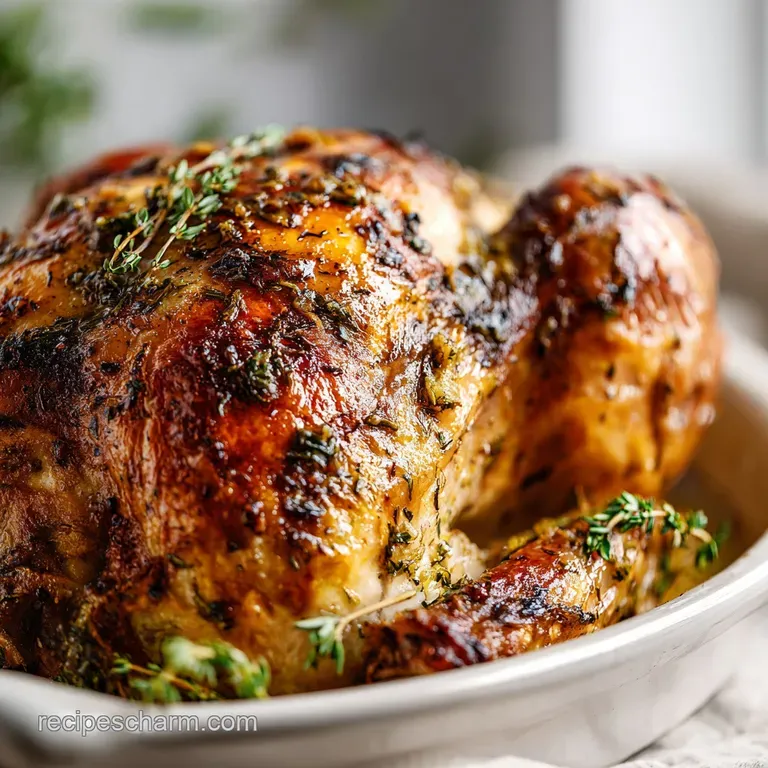
- Time: Active 30 minutes, Passive 1 hours 45 mins, Total 2 hours 15 mins
- Flavor/Texture Hook: Shattering golden skin with a velvety, garlic infused interior
- Perfect for: Family dinner celebrations or post hunt feasts
- Best Wild Turkey Recipe with Garlic and Herbs
- Essential Techniques for Juicy Wild Poultry
- Critical Specs for Roasting Your Bird
- Key Ingredients for Flavorful Game Meat
- Proper Gear for Succulent Roasted Turkey
- Easy Steps for a Juicy Roast
- Fixing Common Game Meat Roasting Problems
- Delicious Variations for Your Game Feast
- Smart Storage and Using Leftover Scraps
- Ideal Pairings for Garlic Herb Turkey
- Very High in Sodium
- Recipe FAQs
- 📝 Recipe Card
Best Wild Turkey Recipe with Garlic and Herbs
The first time I hauled a wild turkey into my kitchen, I treated it exactly like a store-bought bird from the local grocer. That was my first big mistake. The result was a dry, tough mess that tasted more like a cedar plank than a celebratory meal.
Wild turkeys are athletes; they are lean, muscular, and have zero of the injected salt water solutions you find in plastic wrapped supermarket birds. Savor a flavorful and unforgettable Wild Turkey Recipe with Garlic and Herbs, perfect for your next gathering.
To get that flavor packed result your family craves, we have to change our strategy entirely. We are going to use a heavy hitting combination of fat, salt, and aromatics to protect the meat from the dry heat of the oven. This isn't just a recipe; it's a survival guide for lean protein.
Trust me, once you hear that first sizzle of the herb butter hitting the roasting pan, you'll know you're on the right track for a hearty meal that actually tastes like the great outdoors.
Essential Techniques for Juicy Wild Poultry
If we want to avoid the dreaded "gamey" texture, we need to understand the physics of the bird. Unlike domestic turkeys, wild ones have very little intramuscular fat, which means they overcook in the blink of an eye. This method focuses on creating an external fat barrier and using a dry brine to restructure the proteins before they ever see the heat. Much like the preparation for my favorite Ground Deer Meat recipe, we are focusing on moisture retention through careful fat management.
- The Mechanics of the Fat Shield: Butter placed directly under the skin creates a physical barrier that prevents moisture from escaping the lean breast meat during roasting.
- Osmotic Pressure: The salt in our dry brine draws moisture out of the meat, dissolves into a concentrated brine, and is then reabsorbed to season the bird deeply.
- Enzymatic Breakdown: Light brown sugar in the rub doesn't just add sweetness; it aids in the Maillard reaction, ensuring a dark, crackling skin even at lower temperatures.
- Vapor Pressure: Using a combination of white wine and stock in the pan creates a humid environment, slowing down the evaporation of the bird's natural juices.
| Meat Thickness | Internal Temp | Rest Time | Visual Cue |
|---|---|---|---|
| 2 inch (Breast) | 160°F | 20 minutes | Juices run clear when pierced |
| 3 inch (Thigh) | 170°F | 20 minutes | Meat pulls easily from bone |
| 1 inch (Wing) | 175°F | 10 minutes | Skin is mahogany and crisp |
It is vital to remember that wild game continues to cook after you pull it from the heat. This carry over cooking can raise the temperature by 5 to 10 degrees, which is the difference between a velvety slice of turkey and a piece of shoe leather.
Always pull the bird when the thickest part of the breast hits 160°F.
Critical Specs for Roasting Your Bird
Working with a 10 lb wild turkey requires precision. You aren't just cooking meat; you're managing a large thermal mass that responds differently to heat than smaller poultry. If you've ever mastered a Chicken and Peppers recipe, you know that timing and pan temperature are everything. With a bird this size, the specs below are your roadmap to success.
| Component | Science Role | Pro Secret |
|---|---|---|
| Kosher Salt | Protein Denaturation | Use coarse grains to avoid over salting the exterior while deeply seasoning. |
| Unsalted Butter | Thermal Conductor | Use high-quality European butter for a higher fat to water ratio. |
| Smoked Paprika | Color Catalyst | Provides a deep mahogany hue that wild birds struggle to achieve naturally. |
| Dry White Wine | Acidity & Steam | The tartness cuts through the richness of the butter and tenderizes the skin. |
The lemon zest in this mix is not just for fragrance. The oils in the zest are fat soluble, meaning they infuse into the butter and then penetrate the meat, providing a bright counterpoint to the heavy garlic.
This creates a balanced flavor profile that keeps the "gamey" notes in check without masking the natural flavor of the turkey.
Key Ingredients for Flavorful Game Meat
Gathering the right elements is the first step toward a flavor packed dinner. We are going to use a mix of fresh herbs and pantry staples that work together to enhance the wild flavor.
- 10 lb Wild Turkey: The star of the show, cleaned and patted bone dry. Why this? Smaller wild birds stay more tender than older, larger toms.
- 1 cup Unsalted Butter: Softened to a spreadable paste. Why this? Unsalted lets you control the seasoning precisely.
- 3 tbsp Kosher Salt: For the essential dry brine. Why this? Large crystals dissolve slowly for better penetration.
- 6 cloves Garlic: Mined into a fine paste. Why this? Paste integrates into butter better than chunks.
- 2 tbsp Fresh Rosemary: Finely chopped. Why this? Woody herbs stand up well to long roasting times.
- 2 tbsp Fresh Thyme: Stripped from the stems. Why this? Adds an earthy, floral layer of flavor.
- 1 tbsp Fresh Sage: Minced. Why this? Classic poultry pairing that bridges wild and domestic flavors.
- 1 tbsp Light Brown Sugar: For the skin rub. Why this? Promotes browning and balances the salt.
- 1 tsp Smoked Paprika: For color and depth. Why this? Adds a hint of fire roasted aroma.
- 1 cup Dry White Wine: Like Pinot Grigio or Sauvignon Blanc. Why this? Provides steam and acidity for the pan sauce.
| Original Ingredient | Substitute | Why It Works |
|---|---|---|
| Fresh Sage | Dried Sage (1 tsp) | Concentrated flavor. Note: Use less as dried is more potent. |
| Dry White Wine | Apple Cider | Adds sweetness and acidity. Note: Skin will brown faster due to sugar. |
| Unsalted Butter | Ghee | Higher smoke point. Note: Adds a slightly nuttier flavor profile. |
If you find yourself missing the fresh herbs, don't panic. You can use dried versions, but remember the rule of thirds: use one teaspoon of dried for every tablespoon of fresh. The goal is to keep the flavor profile robust enough to stand up to the wild game meat.
Proper Gear for Succulent Roasted Turkey
You don't need a professional kitchen, but a few specific tools will make this process much smoother. Minimal cleanup is always the goal for a family dinner, so choosing the right pan is half the battle.
- Roasting Pan with Rack: A heavy duty pan (like a Viking or All Clad) ensures even heat distribution. The rack is non negotiable; it lifts the bird so the hot air can circulate, preventing a soggy bottom.
- Digital Meat Thermometer: This is your most important tool. Do not rely on the "pop up" timers that come in some birds; they are notoriously inaccurate and will lead to overcooking.
- Kitchen Twine: Used for trussing the legs. This keeps the bird compact so the cavity doesn't dry out too quickly.
- Small Mixing Bowl: For creating your garlic herb compound rub.
- Chef's Knife: For mincing the garlic and herbs into a fine, workable paste.
Chef's Tip: If you don't have a roasting rack, you can create a natural one by lining the bottom of your pan with extra celery stalks and thick onion slices. It props up the bird and adds even more flavor to your pan drippings!
Easy Steps for a Juicy Roast
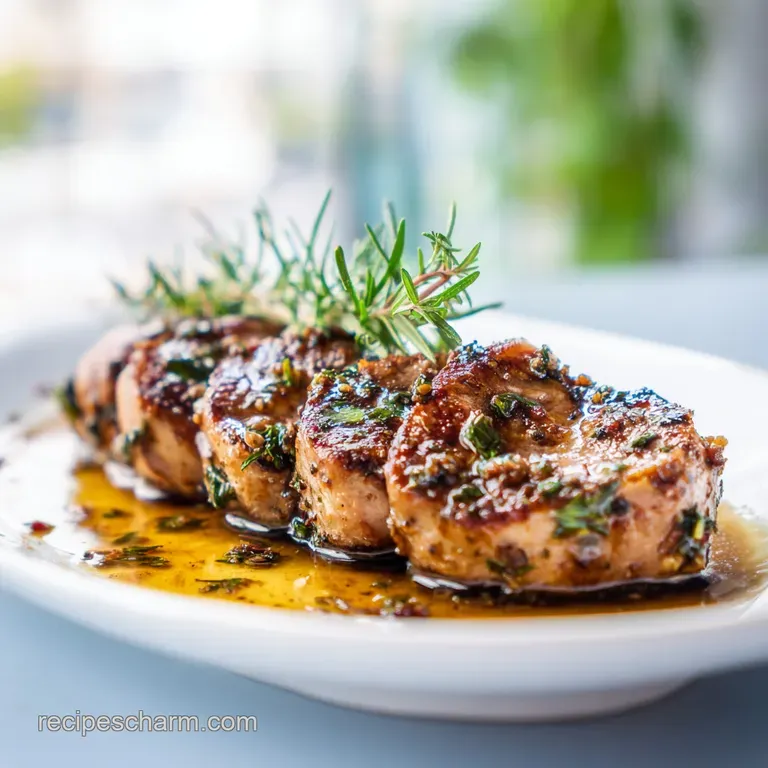
Right then, let's crack on with the actual cooking. This process is all about layers of flavor.
- Prep the bird. Pat the 10 lb Wild Turkey completely dry with paper towels. Note: Moisture on the skin is the enemy of a crisp crunch.
- Apply the dry brine. Mix the 3 tbsp Kosher Salt, 1 tbsp Light Brown Sugar, and 1 tsp Cracked Black Pepper. Rub this all over the turkey and let it sit at room temperature for 30 minutes.
- Create the rub. Combine 1 cup Unsalted Butter, 6 cloves minced Garlic, 2 tbsp Rosemary, 2 tbsp Thyme, 1 tbsp Sage, 1 tsp Smoked Paprika, and the Lemon Zest in a bowl.
- Stuff the skin. Gently loosen the skin over the breast meat with your fingers and slide about half of the butter mixture underneath. Spread it evenly until you see the herbs through the skin.
- Coat the exterior. Rub the remaining butter mixture all over the outside of the bird.
- Aromatize the cavity. Place the halved Garlic head, quartered Onion, and chopped Celery inside the turkey cavity.
- Set the pan. Pour 1 cup Dry White Wine and 2 cups Stock into the bottom of the roasting pan.
- Roast the turkey. Place in a preheated oven at 325°F (165°C). Cook for approximately 1 hours 45 mins.
- Monitor doneness. Roast until the internal temperature reaches 160°F in the thickest part of the breast.
- Rest and serve. Remove from the oven and let the bird rest for 20 minutes before carving. Note: This allows the juices to redistribute so they don't flood the cutting board.
Fixing Common Game Meat Roasting Problems
Wild game can be fickle. Even with a great plan, things can go sideways. But don't worry, most issues have a quick fix that will save your family dinner. If you are used to the quick nature of a Hanky Panky Recipe, the longer roast of a turkey might feel daunting, but it's all about watching the signs.
Why Your Turkey Skin is Pale
If your turkey looks anemic after an hour, it's likely due to excess moisture or a lack of heat. Wild turkeys don't have the same fat content under the skin to help with browning. Crank the heat to 400°F (200°C) for the last 15 minutes to get that golden shatter you're looking for.
Preventing Tough Breast Meat
The breast meat often finishes cooking long before the dark meat. If you notice the breast is hitting 155°F but the legs are still cold, cover the breast tightly with a double layer of aluminum foil. This reflects the heat away from the delicate white meat while the rest of the bird catches up.
| Problem | Root Cause | Solution |
|---|---|---|
| Dry Meat | Overcooking | Pull bird at 160°F; it will reach 165°F while resting. |
| Gamey Flavor | Blood or glands left in | Soak in a mild salt brine for 2 hours before the dry brine step. |
| Soggy Bottom | Bird sitting in liquid | Use a roasting rack or a bed of sturdy vegetables to lift the meat. |
Common Mistakes Checklist
- ✓ Never skip the resting period - cutting too early results in dry meat.
- ✓ Don't baste with watery liquids; use melted butter or oil instead.
- ✓ Avoid opening the oven door frequently, as this drops the temperature significantly.
- ✓ Ensure the bird is at room temperature for 30 minutes before roasting to ensure even cooking.
- ✓ Do not over stuff the cavity; air needs to circulate to cook the bird safely.
Delicious Variations for Your Game Feast
While the garlic and herbs are classic, you can easily adapt this recipe to suit different tastes or cooking methods. Sometimes you want a different vibe for your wild turkey recipes, especially if you have a lot of birds in the freezer.
- Wild turkey recipe with garlic and herbs slow cooker: If you want a "set it and forget it" meal, place the herb rubbed bird (or just the breasts) in a slow cooker with 1 cup of stock. Cook on LOW for 6-7 hours. Note: You won't get crispy skin this way, so consider a quick broil at the end.
- Smoked wild turkey recipe garlic herbs: For a deep, outdoor flavor, smoke the bird at 275°F (135°C) using apple or cherry wood. The garlic and herbs pair beautifully with the sweet smoke.
- Wild turkey roast recipe garlic herbs (Oven Method): If you're only cooking the breast, reduce the roasting time to about 45-60 minutes. It's an easy wild turkey recipe garlic herbs option for smaller groups.
If you want a specific outcome, try these quick adjustments: If you want a spicier kick, add 1 tsp of cayenne pepper to the butter rub. If you want a sweeter profile, swap the white wine for hard apple cider.
If you want a crispier skin, leave the salted bird uncovered in the fridge overnight before adding the butter.
Smart Storage and Using Leftover Scraps
Leftovers are the best part of any large roast. Because wild turkey is so lean, you have to be careful when reheating it so it doesn't turn into sawdust.
- Fridge
- Store carved meat in an airtight container for up to 4 days. Keep it moistened with a little bit of the leftover pan juices.
- Freezer
- Wrap meat tightly in plastic wrap and then foil. It will stay good for up to 3 months.
- Reheating
- The best way to reheat wild turkey is in a covered dish with a splash of stock. Heat at 300°F (150°C) until just warmed through.
Zero Waste Tips: Don't you dare throw away that carcass! The bones of a wild turkey make the most incredible, rich stock. Simmer the bones with carrot peels, onion ends, and celery scraps for 4 hours. You'll have a base for soups that beats anything you can buy in a carton.
You can also use the leftover fatty skin to flavor a pot of beans or greens.
Ideal Pairings for Garlic Herb Turkey
This hearty bird needs sides that can stand up to its bold, herbaceous flavor. Think of textures that contrast the crispy skin and velvety meat.
A classic choice is a root vegetable mash. The sweetness of roasted carrots or parsnips complements the savory garlic perfectly. If you want something a bit lighter, a crisp green salad with a lemon vinaigrette echoes the zest we used in the compound butter.
For a truly indulgent meal, serve it alongside a wild rice pilaf cooked in the turkey stock you made from the giblets.
The acidity in a cranberry relish is also a great partner for wild game. It cuts through the richness of the butter and provides a bright pop of color on the plate. No matter what you choose, keep it simple so the hard earned flavor of the wild turkey remains the star of your family dinner.
Dry Brining Does Not Dry Meat
Many people believe that salt "draws out moisture" and leaves the meat dry. In reality, while salt does draw out moisture initially, it creates a brine that dissolves the muscle proteins.
This allows the meat to reabsorb that moisture and hold onto it much more tightly during the roasting process, resulting in a juicier bird.
Basting Does Not Make Meat Juicy
Pouring liquid over the skin of the turkey while it roasts actually does very little for the moisture of the meat inside. In fact, frequent basting often results in rubbery, soggy skin because the liquid cools the surface and prevents it from crisping.
The moisture in the meat comes from internal fat and proper temperature control, not from the outside.
Gamey Meat Is Not Inevitable
The "gamey" taste people complain about often comes from poor field dressing or allowing the meat to get too warm after the hunt. If the bird is cleaned quickly and handled properly, the flavor is simply a richer, deeper version of domestic poultry.
Using aromatics like garlic, rosemary, and sage helps bridge the gap for those who are used to milder store-bought meats.
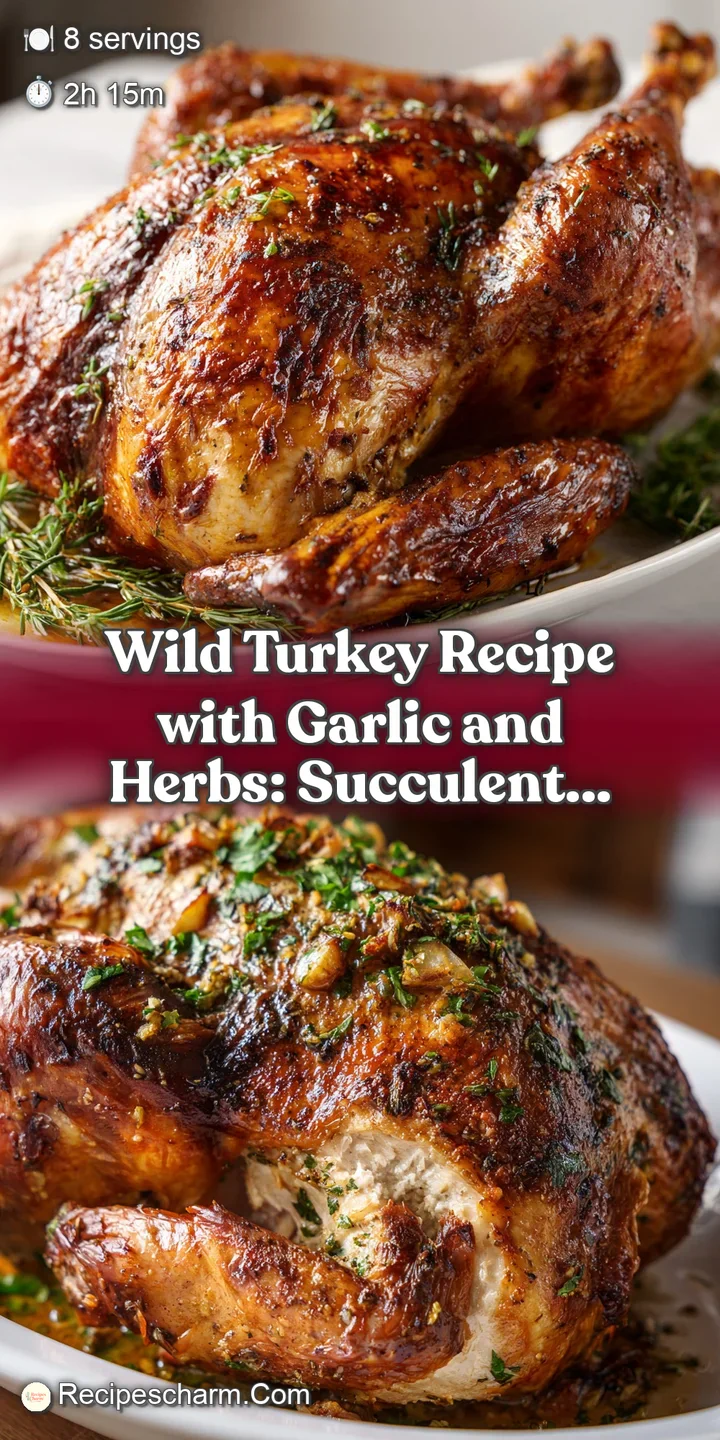
Very High in Sodium
1180 mg mg of sodium per serving (51% of daily value)
American Heart Association recommends limiting sodium intake to about 2,300mg per day.
Tips to Reduce Sodium
-
Low-Sodium Stock-30%
Ensure you are using a truly low-sodium chicken or wild game stock. Many 'low-sodium' options still contain significant sodium. Look for a no-salt added variety or consider making your own.
-
Reduce Added Salt-25%
Kosher salt is a major contributor to the sodium content. Try reducing the amount of kosher salt used from 3 tbsp to 1.5 tbsp and taste as you go. You can always add more, but you can't take it away!
-
Fresh Over Processed-15%
Stick to using fresh rosemary, thyme, and sage instead of any dried or pre-mixed seasonings. These often contain hidden sodium.
-
Garlic Power!-5%
While the recipe calls for plenty, ensure your garlic cloves are fresh. They will add flavor without increasing sodium. Do not use garlic salt.
-
Spice It Up
Experiment with other sodium free spices and herbs to enhance flavor. Smoked paprika, black pepper, and lemon zest are great, but consider adding a pinch of red pepper flakes for an extra kick, while reducing the need for salt.
Recipe FAQs
What herbs pair best with turkey?
Rosemary, thyme, and sage are the best classic pairings. These woody, earthy herbs stand up well to the long roasting time required for wild turkey. They infuse beautifully into the compound butter protecting the breast meat.
What is the best way to prepare wild turkey breast?
Use a compound butter stuffed under the skin and a dry brine. This two-part approach ensures seasoning penetrates deeply while the butter barrier protects the lean meat from drying out in the oven heat. If you enjoyed controlling the moisture here, you can see how the same fat-layer principle works in our Blood Sausage Recipe.
What is a good marinade for wild turkey?
A dry brine, not a liquid marinade, is superior for wild turkey. Liquid marinades add surface moisture which prevents the skin from crisping. A dry brine (salt, sugar, spices rubbed on the exterior) seasons deeper and aids in moisture retention during roasting.
Should you soak wild turkey before cooking?
No, do not soak a wild turkey for texture reasons. Soaking adds unnecessary surface moisture which ruins the skin crisping. If you are concerned about residual "gamey" flavor, soak it briefly (2 hours) in a mild salt solution, then pat it completely dry before seasoning.
How do I ensure the wild turkey breast doesn't dry out?
Pull the turkey from the oven when the internal temperature hits 160°F. Wild turkey is extremely lean and continues to cook during the 20-minute rest period (carryover cooking), where it should reach the safe temperature of 165°F.
This critical temperature management prevents overcooking the lean breast meat.
Can I use dried herbs instead of fresh herbs in the compound butter?
Yes, but you must adjust the quantity for potency. Use one teaspoon of dried herbs for every one tablespoon of fresh herbs called for in the recipe. Dried herbs are far more concentrated, so overusing them can lead to an unpleasantly bitter flavor profile.
What temperature should I roast wild turkey at for the best skin?
Start roasting at a moderate 325°F, then finish hot. Roast until the internal temperature is nearly reached, then increase the oven to 400°F for the final 15 minutes. This blast of high heat helps caramelize the fat barrier and achieve a beautifully crisp skin without overcooking the interior; this high heat finishing technique is also key in our Veal Cutlet Recipe.
Garlic Herb Wild Turkey Roast
Ingredients:
Instructions:
Nutrition Facts:
| Calories | 658 kcal |
|---|---|
| Protein | 86.4 g |
| Fat | 31.2 g |
| Carbs | 3.8 g |
| Fiber | 0.6 g |
| Sugar | 1.8 g |
| Sodium | 1180 mg |
