Irish Soda Bread: Traditional and Crusty
- Time: Active 10 minutes, Passive 35 minutes, Total 45 minutes
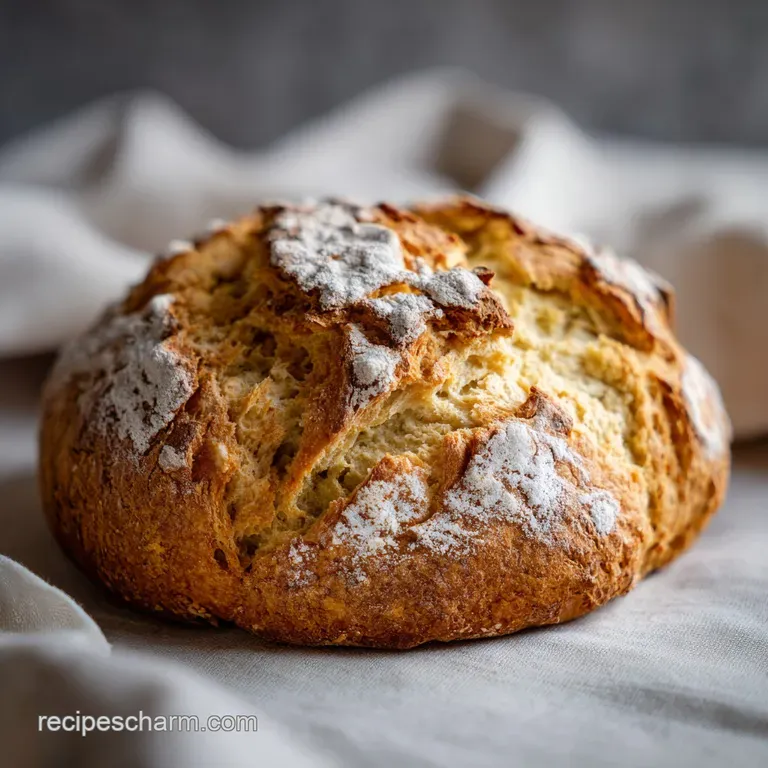
- Flavor/Texture Hook: Craggy, golden crust with a soft, buttermilk tangy interior
- Perfect for: Hearty family dinners, last minute hosting, or beginner bakers
- Making an Authentic Irish Soda Bread Recipe
- Why This Crust Stays So Craggy
- Essential Recipe Timing and Yield Specs
- Gathering Your Traditional Pantry Ingredients
- Choosing Your Best Baking Equipment
- Detailed Baking and Shaping Instructions
- Fixing Common Soda Bread Problems
- Creative Ingredient Swaps and Additions
- Keeping Your Bread Fresh Longer
- Serving Your Bread at Family Dinner
- Kitchen Wisdom Myths
- Recipe FAQs
- 📝 Recipe Card
Making an Authentic Irish Soda Bread Recipe
The first time I pulled a hot loaf of this bread out of the oven, the aroma hit me like a warm hug. It wasn't the sweet, yeasty smell of a standard sandwich loaf, but something more primal toasty, slightly tangy, and deeply earthy.
I remember sitting at my kitchen table, steam rising from the center of the cross I'd carved into the dough, realizing that I’d never need to wait hours for dough to rise ever again.
This irish soda bread recipe is the ultimate solution for those nights when you realize the soup is simmering but the bread box is empty. It is a rugged, no nonsense loaf that doesn't ask for much.
You don't need a stand mixer, you don't need a warm spot for proofing, and you certainly don't need a degree in fermentation. It’s the kind of bread that feels alive under your hands, moving from a shaggy mess to a proud, golden mound in less time than it takes to watch a sitcom.
We are going for a texture that is dense yet tender, which is exactly why this recipe works so well for a family dinner. It holds its own against heavy gravies and thick butter. There is something incredibly satisfying about hearing that "hollow" thud when you tap the bottom of the baked loaf.
It’s the sound of success, and trust me, once you hear it, you’ll be hooked on the simplicity of this traditional method.
Why This Crust Stays So Craggy
The magic of this loaf lies in the immediate chemistry of its ingredients. Unlike yeast breads that require time to build structure, this bread relies on a fast acting partnership that happens the moment wet meets dry.
- Acidic Activation: The lactic acid in the buttermilk reacts instantly with the baking soda, releasing carbon dioxide gas that pushes the dough upward before it even hits the oven.
- Butter Steam: Those small, pea sized lumps of cold butter melt in the high heat, creating tiny pockets of steam that help the interior stay tender while the outside hardens.
- over High heat Searing: Starting at 425°F (220°C) "sets" the crust quickly, trapping the expanding gases inside to create that signature lift and the beautiful, shattered edges along the cross.
| Method | Time | Texture | Best For |
|---|---|---|---|
| Cast Iron Skillet | 45 mins | Ultra thick, crunchy bottom | Authentic, rustic presentation |
| Baking Sheet | 45 mins | Even browning, softer sides | Large batches or multiple loaves |
| Dutch Oven | 50 mins | Maximum height and steam | Crust lovers who want a "shatter" |
Choosing your cooking method depends on how much you value that bottom crust. I personally swear by a cast iron skillet because it holds the heat and gives the bread a nearly fried, crispy base that is simply unmatched.
If you are feeding a larger crowd, using a parchment lined baking sheet is perfectly fine, though you might lose a bit of that intense crunch on the sides.
Essential Recipe Timing and Yield Specs
Precision matters when you are dealing with chemical leaveners. If you let the dough sit too long before sliding it into the oven, the bubbles will dissipate, leaving you with a heavy brick. This bread is all about the "flow" from the bowl to the oven in under ten minutes.
It makes 10 hearty servings, perfect for a gathering or a week of morning toast.
| Thickness | Oven Temp | Bake Time | Visual Cue |
|---|---|---|---|
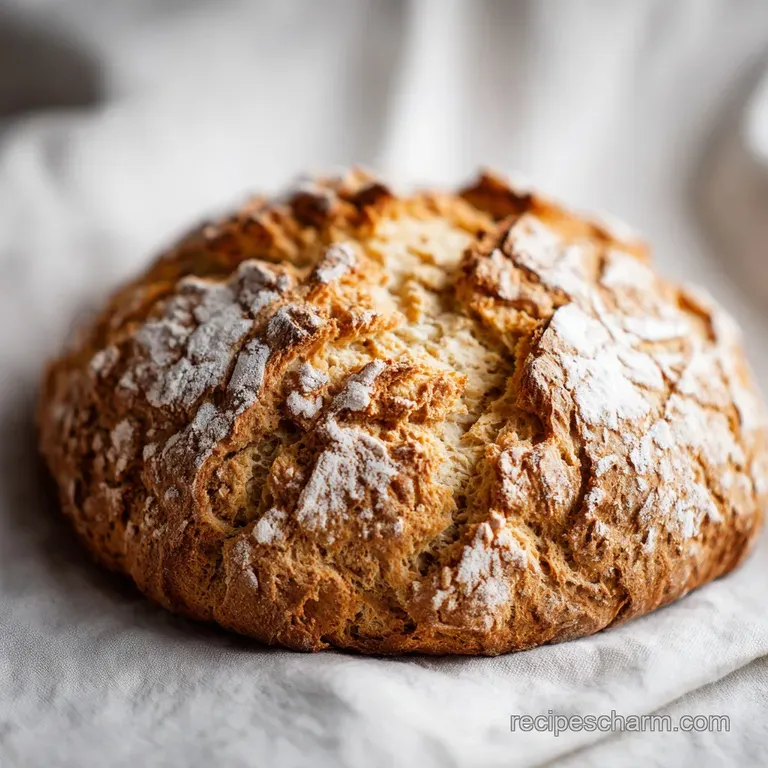
| 1.5 inches | 425°F (220°C) | 35 minutes | Deep golden with hollow sound when tapped |
| 2.0 inches | 425°F (220°C) | 42 minutes | Cracks in the cross look dry, not doughy |
| 1.0 inch | 425°F (220°C) | 28 minutes | Edges turn dark brown and firm |
The "tap test" is your best friend here. If you flip the loaf over (carefully, it's hot!) and hit the bottom with your knuckles, it should sound like a drum. If it sounds like a dull thud, it needs five more minutes. This is a dense bread by nature, but it should never feel like lead.
Gathering Your Traditional Pantry Ingredients
Every ingredient in this irish soda bread recipe serves a specific structural purpose. We aren't just looking for flavor; we are looking for the science of the rise.
| Ingredient | Science Role | Pro Secret |
|---|---|---|
| Buttermilk | Acidic Catalyst | Use full fat for a richer, more velvety crumb |
| Baking Soda | Primary Leavener | Sift it with the flour to avoid bitter "clumps" |
| Cold Butter | Moisture Barrier | Keep it cold from the fridge to prevent a greasy dough |
| All Purpose Flour | Gluten Structure | Don't overwork it, or the bread becomes tough |
I've tried making this with low-fat buttermilk, and honestly, don't even bother. You need that fat to soften the flour's protein, or you'll end up with something closer to a giant cracker than a loaf of bread. The sugar might seem optional, but it helps with browning and balances the metallic tang of the soda.
Component Breakdown and Substitutions
- 450g All purpose flour: The backbone. Why this? Provides enough gluten for structure without being as heavy as bread flour.
- Substitute: 50/50 mix of all purpose and whole wheat for a nuttier flavor.
- 1 tsp Baking soda: The engine. Why this? Reacts with buttermilk to create the "lift" in the absence of yeast.
- Substitute: No direct sub baking powder won't give the same height here.
- 420ml Cold full fat buttermilk: The activator. Why this? The acid reacts with the soda while the fat keeps it moist.
- Substitute: 400ml milk + 1 tbsp lemon juice (let sit 10 mins).
- 42g Cold unsalted butter, cubed: The tenderizer. Why this? Rubbing butter into flour prevents excessive gluten development.
- Substitute: Cold lard for an even more traditional, savory flavor.
- 1 large egg: The binder. Why this? Adds richness and helps the dough hold its shape during the rise.
- Substitute: 1/4 cup plain yogurt (makes it slightly denser).
While this is a traditional no yeast soda bread, other starters like Amish Friendship bread require much more patience and a completely different fermentation process. If you're in a hurry, stick to this soda based method.
Choosing Your Best Baking Equipment
You don't need fancy gadgets, but the right vessel changes the texture of the crust. A cast iron skillet is the gold standard because it mimics the hearth ovens of old Ireland. It conducts heat beautifully and creates a crust that is thick and nearly impossible to resist.
If you don't have cast iron, a standard heavy duty baking sheet lined with parchment paper works well. Just avoid thin, flimsy pans that might warp in the 425°F heat.
You'll also want a large glass or ceramic mixing bowl avoid metal if you're sensitive to the "metallic" taste, though it rarely affects the bread itself. For the cross, a very sharp serrated knife or a baker's lame is essential for getting that deep, clean cut.
Chef's Note: If you have a pizza stone, preheat it in the oven and bake the loaf directly on parchment on top of the stone. The immediate heat transfer from the stone to the dough creates a "shatter" crust that is absolutely world class.
Detailed Baking and Shaping Instructions
- Preheat your oven to 425°F (220°C). In your large bowl, whisk together the 450g flour, 1 tsp baking soda, 1 tsp sea salt, and 1 tbsp sugar. Note: Whisking ensures the soda is perfectly distributed so you don't get bitter spots.
- Drop in the 42g of cold cubed butter. Use your fingertips to rub the butter into the flour. Stop when it looks like coarse sand with a few pea sized lumps.
- Make a wide well in the center of your dry mixture. Pour in the 420ml buttermilk and the beaten egg.
- Use a wooden spoon or your hand in a 'claw' shape to gently bring the flour into the liquid. Mix only until a shaggy, wet dough forms.
- Turn the dough onto a lightly floured surface. Gently pat it into a round disc about 1.5 inches thick. Note: Do not knead this dough; handle it as little as possible to keep it light.
- Transfer the disc to your skillet or parchment lined tray.
- Use a sharp knife to cut a deep cross, about 1 inch deep, across the top. Extend the cut all the way to the edges.
- Slide the loaf into the center of the oven. Bake at 425°F (220°C) for 15 minutes.
- Reduce the heat if the top is browning too fast, then continue baking for another 20 minutes (total 35 minutes).
- Remove the loaf when the bottom sounds hollow when tapped.
Fixing Common Soda Bread Problems
The most common mistake people make with an irish soda bread recipe is overworking the dough. Because there is no yeast to create a flexible network, the "lift" is fragile. If you stir it too much, you develop too much gluten, and the carbon dioxide bubbles get trapped in a rubbery mess rather than a light crumb.
Why Your Bread Is Too Dense
If your loaf feels like a "lead brick," it usually comes down to the buttermilk or the handling. If the buttermilk isn't acidic enough (which happens sometimes with DIY "lemon milk" subs), the soda won't fully react. Alternatively, if you kneaded the dough like a standard pizza dough, you've toughened the crumb.
| Problem | Root Cause | Solution |
|---|---|---|
| Bitter/Soapy Taste | Clumped baking soda | Sift soda with flour next time |
| Raw/Gummy Center | Oven too hot initially | Tent with foil and bake 5 mins longer |
| No Rise | Expired baking soda | Check "use by" date or test in vinegar |
Common Mistakes Checklist
- ✓ Pat the dough into shape rather than rolling it (preserves air pockets).
- ✓ Ensure the oven is fully preheated to 425°F before the dough goes in.
- ✓ Don't skip the deep cross; it allows the center to cook through.
- ✓ Let the bread cool for at least 20 minutes before slicing to set the crumb.
- ✓ Use cold ingredients (butter/buttermilk) to maintain the fat pockets.
Creative Ingredient Swaps and Additions
While the traditional loaf is plain, there are plenty of ways to dress up this bread recipe for different occasions. My family loves a savory version with a handful of sharp white cheddar and some fresh rosemary mixed into the dry ingredients.
If you are looking for a sweeter treat, you can make what the Irish call "Spotted Dog." Simply add 1/2 cup of raisins or currants and an extra tablespoon of sugar. It’s brilliant when toasted and slathered in salted butter. For another decadent treat, you might even consider serving a sweet version alongside a gluten-free Carrot Cake for a full tea time spread.
Variations for Every Palate
- The Savory Herb: Add 1 tbsp dried thyme and 1/2 cup grated Parmesan.
- The Seeded Loaf: Mix in 2 tbsp caraway seeds for a more traditional, pungent flavor.
- The dairy-free Alternative: Use 400ml soy milk mixed with 1 tbsp apple cider vinegar. Note: The texture will be slightly more crumbly than the buttermilk version.
| Original Ingredient | Substitute | Why It Works |
|---|---|---|
| Buttermilk (420ml) | Plain Yogurt (420ml) | Similar acidity but makes the bread much denser |
| All Purpose Flour | Whole Wheat Flour | Nuttier flavor. Note: Needs 20ml extra liquid |
| Granulated Sugar | Honey | Adds floral notes and extra moisture to the crumb |
Keeping Your Bread Fresh Longer
This bread is best eaten the day it is made. Because it lacks preservatives and the fat content is relatively low, it can dry out quickly. However, that doesn't mean leftovers are a waste.
Storage: Wrap the cooled loaf tightly in plastic wrap or store in an airtight container at room temperature for up to 2 days. For longer storage, you can freeze the loaf. Slice it first, then freeze the slices with parchment paper between them for up to 3 months.
To reheat, just pop a slice directly into the toaster.
Zero Waste: If your bread goes stale, do not throw it away! It makes the absolute best breadcrumbs for coating chicken or topping mac and cheese. You can also cube it, toss it with olive oil and herbs, and bake it for 10 minutes to make incredibly crunchy croutons for a kale Caesar salad.
Serving Your Bread at Family Dinner
The best way to serve this is warm, sliced thick, and served with a bowl of salted butter. If you want to go the extra mile, a drizzle of honey on a warm slice is pure heaven. It is the perfect companion for a Slow Cooker Reuben Dip during a party, or alongside a classic beef stew on a rainy Tuesday.
I always suggest placing the loaf in the center of the table and letting people tear off chunks. There is something communal and "flavor packed" about sharing a rustic loaf that looks like it came straight from a farmhouse kitchen.
Whether it's a holiday feast or a simple "one pan" meal night, this bread brings a sense of comfort that few other recipes can match.
Serving Shortcut Ideas
- If you want a crunchier crust, brush the top with melted butter right after baking.
- If you want a softer crust, wrap the hot loaf in a clean tea towel as it cools.
- If you want a "sandwich" style, slice it thin once completely cold and use it for grilled cheese.
Kitchen Wisdom Myths
One of the biggest myths about this irish soda bread recipe is that you need to "bless" the bread for it to rise. While the cross is a beautiful tradition, its real purpose is far more practical. It allows the heat to penetrate the thickest part of the dough, ensuring the center isn't raw while the outside burns.
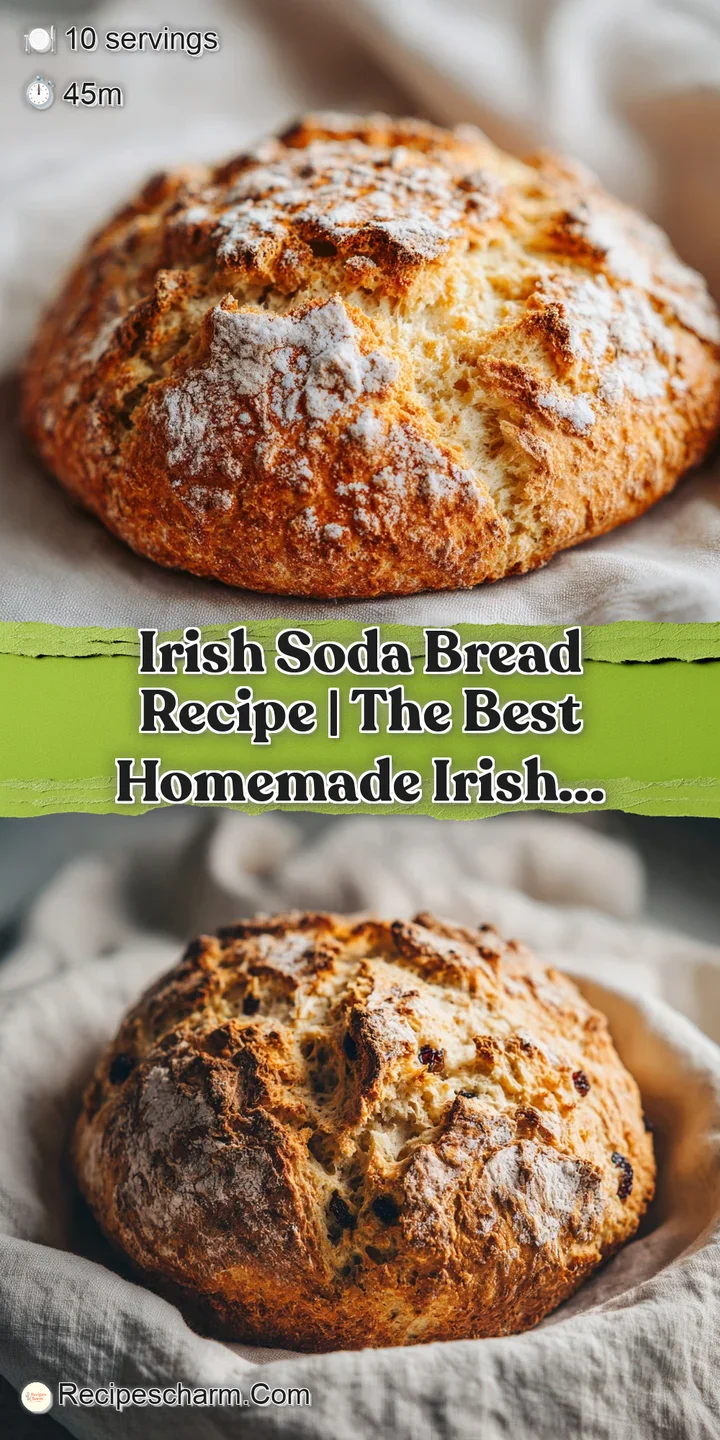
Another misconception is that the dough should be smooth. In reality, a smooth soda bread dough is usually an over mixed one. You want it to look "shaggy" and a bit messy. That uneven surface is what creates those wonderful crunchy bits on the crust that everyone fights over at the dinner table.
Trust the mess it’s where the flavor lives.
Recipe FAQs
What is the secret to soda bread?
The secret is minimal handling. You must mix only until a shaggy dough forms and use a light touch to pat it into a disc, which prevents the gluten from toughening. If you enjoyed learning to manage dough density here, see how we use similar principles in our authentic German Frikadellen for perfectly textured results.
Is there a difference between soda bread and Irish soda bread?
Yes, they are distinct. While both use baking soda as a leavening agent, traditional Irish soda bread relies on a simple mix of flour, salt, soda, and buttermilk, whereas other soda breads often include fats like butter or eggs.
Is soda bread Irish or Scottish?
Both regions have a history with it. While most famous as an Irish staple created to utilize soft wheat flours that required chemical leaveners rather than yeast, similar variations exist throughout the British Isles.
What do you eat Irish soda bread with?
Serve it with salted butter or a hearty stew. Its dense, rustic crumb is the perfect vessel for soaking up liquids, making it a classic partner for a bowl of creamy roasted tomato soup.
How to ensure the center cooks through without burning the bottom?
Cut a deep cross across the top before baking. This incision allows heat to penetrate the thickest part of the dough, ensuring the center sets while the crust develops properly at 425°F.
Is it true I should knead the dough for a smoother crust?
No, this is a common misconception. Kneading creates excess gluten, which will result in a tough, chewy loaf rather than the traditional tender crumb; always pat the dough into shape instead.
How to tell if the bread is done?
Tap the bottom of the loaf. If the bread sounds hollow, it is fully baked and ready to be removed from the oven after its total 35-minute cook time.
Traditional Irish Soda Bread
Ingredients:
Instructions:
Nutrition Facts:
| Calories | 232 calories |
|---|---|
| Protein | 6.7g |
| Fat | 5.8g |
| Carbs | 37.5g |
| Fiber | 1.2g |
| Sugar | 3.3g |
| Sodium | 414mg |
