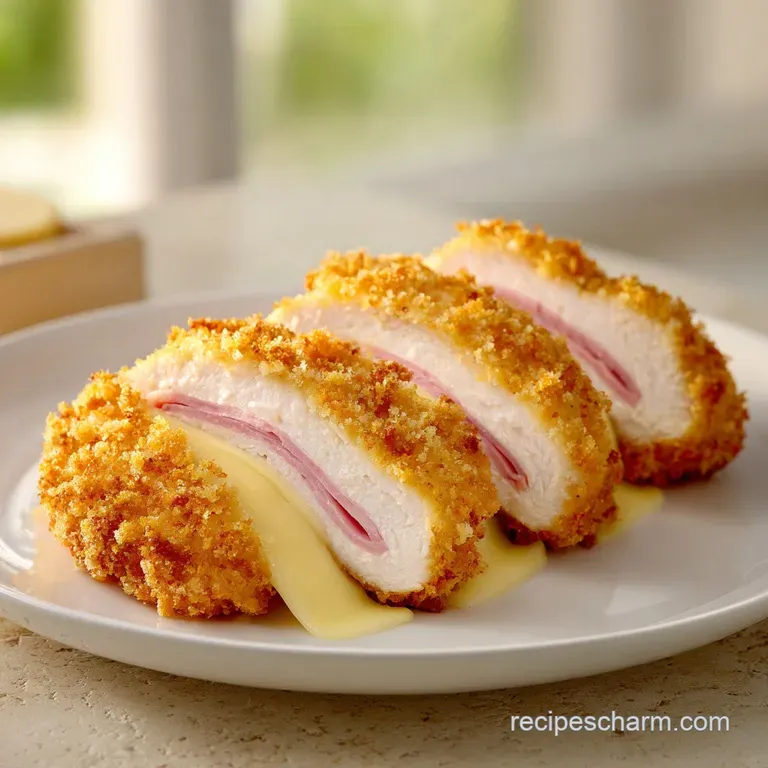
Classic Chicken Cordon Bleu: Crispy and Golden
- Time: 25 min active + 30 min cooking = Total 55 mins
- Flavor/Texture Hook: Shatter crispy Panko crust with a velvety Dijon cream sauce
- Perfect for: Hearty family dinners or a Sunday lunch that feels fancy but uses basic tools
- The Classic Chicken Cordon Bleu Recipe
- Key Secrets for Best Results
- Essential Recipe Specifications
- The Essential Kitchen Kit
- Step by Step Cooking Guide
- Fixing Common Cooking Errors
- Troubleshooting Common Issues
- Swaps and Flavor Twists
- Scaling for More Guests
- Kitchen Myths Debunked
- Storing and Waste Tips
- Perfect Complements
- Critical in Sodium
- Recipe FAQs
- 📝 Recipe Card
That first loud sizzle when the breaded chicken hits the hot olive oil is where the magic starts. I remember the first time I tried making this for my parents, and it was a complete disaster.
I didn't pound the chicken thin enough, so the outside burnt before the inside was even warm, and the Swiss cheese just decided to evacuate the chicken and fry itself in the pan. It looked more like a cheese omelet with chicken bits than a French inspired dinner.
But after a few weekends of experimenting with my basic skillet and oven, I figured out that the secret isn't in fancy equipment, it's in the prep. Once you get the thickness right and the seal tight, it's actually a very forgiving dish.
Trust me, you don't need a professional kitchen to pull this off. This classic chicken cordon bleu recipe is all about a few simple tricks that ensure the chicken stays tender and the filling stays put. It's the kind of hearty, flavor packed meal that makes the whole house smell like a bistro.
The Classic Chicken Cordon Bleu Recipe
Right then, let's get into why this specific method works so well. Most people either fry it all the way through and dry out the meat, or bake it from raw and end up with soggy breadcrumbs. By combining both, we get the best of both worlds.
Uniform Thickness: Pounding the chicken ensures it cooks at the exact same rate from edge to center, so you don't get raw spots near the ham.
The Fat Barrier: Searing the meat first creates a crust that locks in the juices and helps hold the roll's shape.
Controlled Melting: Finishing in the oven allows the cheese to reach a velvety consistency without overheating and exploding through the crust.
Starch Gelatinization: The flour dredge acts as a glue, making sure the egg and Panko don't slide off the chicken during the sear.
| Method | Prep Time | Texture | Best For |
|---|---|---|---|
| Stovetop Only | 25 mins | Very Crispy / Risk of raw center | Small portions |
| Oven Only | 25 mins | Softer Crust / Evenly cooked | Large batches |
| Sear & Bake | 25 mins | Shatter crispy / Juicy center | The gold standard |
I've found that the "Sear & Bake" method is the only way to go for a family dinner. It gives you that professional looking golden brown finish but takes the stress out of wondering if the middle is cooked. If you enjoy other crispy chicken options, you might also like my garlic parmesan wings recipe for game nights.
Key Secrets for Best Results
When you're looking at the components of a classic chicken cordon bleu recipe, it's easy to think it's just "meat, cheese, ham." But each part has a job to do to keep the structural integrity of the roll.
| Ingredient | Science Role | Pro Secret |
|---|---|---|
| Panko Breadcrumbs | Low density structure | Use these over regular crumbs for a lighter, airier crunch |
| Swiss Cheese | Low moisture melt | Use a deli slice; pre shredded cheese has cellulose that stops it from melting smoothly |
| Dijon Mustard | Acidic balance | The tang cuts through the richness of the butter and cheese |
| Whole Milk | Protein/Fat base | Prevents the sauce from breaking or separating when simmering |
Honestly, don't even bother with low-fat cheese here. You want that rich, gooey pull that only full fat Swiss provides. It's the difference between a meal that feels like a treat and one that feels like a diet.
Essential Recipe Specifications
For the chicken rolls, you'll need things that provide a solid crunch and a savory base. For the sauce, we're going for a simple roux based cream that ties everything together.
For the Chicken Rolls
- 4 boneless, skinless chicken breasts (approx. 1.5 lbs / 680g) Why this? Uniform size helps consistent cooking times
- 4 slices deli ham (approx. 4 oz / 115g) Why this? Provides a salty, smoky contrast
- 4 slices Swiss cheese (approx. 4 oz / 115g) Why this? Melts beautifully and tastes nutty
- 1/2 tsp salt Why this? Essential for seasoning the protein
- 1/2 tsp black pepper Why this? Adds a subtle heat
- 1 tbsp olive oil Why this? High smoke point for searing
- 1/2 cup all purpose flour Why this? Creates the bond for the breading
- 2 large eggs, beaten Why this? The "glue" for the crumbs
- 1 cup Panko breadcrumbs Why this? Maximum crunch factor
- 1 tsp garlic powder Why this? Depth of flavor in the crust
- 1/2 tsp paprika Why this? Helps achieve a deep golden color
Substitution Table
| Original Ingredient | Substitute | Why It Works |
|---|---|---|
| Panko Breadcrumbs | Regular Breadcrumbs | Similar crunch. Note: Denser texture, less "shatter" |
| Swiss Cheese | Gruyère | Similar melt. Note: Stronger, more earthy flavor |
| Deli Ham | Prosciutto | Thinner and saltier. Note: Use 2 slices per breast for flavor balance |
| Whole Milk | Heavy Cream | Higher fat. Note: Makes the sauce much thicker and richer |
If you're short on time, you can use pre pounded chicken cutlets from the store, but be careful. Sometimes they're too thin, and you'll lose that hearty "roll" feel. I usually prefer doing it myself just to be sure.
For the Dijon Cream Sauce
- 2 tbsp unsalted butter Why this? Base for the roux
- 2 tbsp all purpose flour Why this? Thickening agent
- 1 cup whole milk Why this? Creamy liquid base
- 1 tbsp Dijon mustard Why this? Signature tangy flavor
- 1/4 tsp salt Why this? Enhances all other flavors
- 1 pinch nutmeg Why this? Secret ingredient for French sauces
The Essential Kitchen Kit
You don't need a bunch of gadgets for this. A few basics will do the job perfectly.
- Meat Mallet: Essential for getting that 1/4 inch thickness. If you don't have one, a heavy rolling pin or even the bottom of a sturdy skillet works.
- Plastic Wrap: Use two sheets to protect the chicken from the mallet and keep your counters clean.
- Large Skillet: Something that can go from the stovetop to the oven if it's oven safe, otherwise a separate baking dish is fine.
- Mixing Bowls: Three shallow bowls for the "standard breading station" (flour, egg, crumbs).
- Instant Read Thermometer: This is the only way to be 100% sure the chicken is 165°F without cutting into it and letting the cheese run out.
Chef Note: When setting up your breading station, put the flour bowl furthest from the chicken, then the egg, then the crumbs. It prevents you from dragging crumbs back into the egg and making a mess.
Step by step Cooking Guide
Let's crack on with the actual cooking. This is where the classic chicken cordon bleu recipe comes together.
- Flatten the chicken. Place breasts between two sheets of plastic wrap and pound them to a uniform 1/4 inch thickness. Note: This prevents the meat from being tough and ensures the center cooks through.
- Season the meat. Sprinkle both sides of the chicken with salt and pepper.
- Layer the filling. Place one slice of ham and one slice of Swiss cheese on each breast, leaving a 1/2 inch border around the edges. Note: The border is critical to stop the cheese from leaking.
- Roll and secure. Tightly roll the chicken around the ham and cheese. Secure the seam with toothpicks if they feel loose.
- First coat. Dredge each roll in flour, shaking off any excess. Note: Too much flour will cause the breading to peel off in the pan.
- Egg bath. Dip the floured rolls into the beaten eggs until fully coated.
- Final crunch. Press the rolls into the Panko, garlic powder, and paprika mixture. Press firmly to ensure the crumbs stick.
- Sear the rolls. Preheat oven to 375°F (190°C). Heat olive oil in a skillet over medium high heat and sear for 2-3 minutes per side until golden brown and sizzling.
- Finish in oven. Transfer seared rolls to a baking dish and bake until the internal temperature reaches 165°F.
- Whisk the sauce. While chicken bakes, melt butter in a saucepan. Whisk in flour for 1 minute, then stir in milk, Dijon, salt, and nutmeg until the sauce is velvety and thickened.
Precision Checkpoints:
- Thickness: Chicken must be exactly 1/4 inch (approx 6mm).
- Temperature: Oven at 375°F (190°C).
- Doneness: Internal chicken temp must hit 165°F (74°C).
Fixing Common Cooking Errors
Even for experienced cooks, this dish can be tricky. The most common issue is the "cheese explosion" where the filling leaks out during the sear.
Troubleshooting Common Issues

| Issue | Solution |
|---|---|
| Why Your Cheese Leaked | This usually happens because the chicken wasn't rolled tightly enough or the filling extended to the very edge of the meat. The heat causes the cheese to expand, and if there's no meat "wall" to hold |
| Why Your Breading Fell Off | If you didn't shake off the excess flour or if the oil wasn't hot enough, the breading can slide off. The oil needs to be shimmering before the chicken hits the pan to "set" the crust instantly. |
| Why the Chicken is Dry | Overcooking is the enemy here. Even a few extra minutes in the oven can turn a juicy breast into cardboard. Always use a thermometer rather than relying on a timer. |
Common Mistakes Checklist
- ✓ Pounded chicken to 1/4 inch (not just guessed)
- ✓ Left a border around the cheese and ham
- ✓ Sizzled the oil before adding chicken
- ✓ Checked internal temp with a thermometer
- ✓ Used full fat Swiss for a smooth melt
Swaps and Flavor Twists
If you want to move away from the traditional version, there are plenty of ways to tweak this without ruining the balance. For a different protein focused meal, you might consider a chicken and peppers recipe for a lighter dinner.
Decision Shortcut
- If you want a smokier taste → Use smoked Gruyère instead of Swiss.
- If you want a lighter version → Use Panko mixed with almond flour and bake without searing.
- If you want more zing → Add a teaspoon of lemon zest to the Panko mixture.
Swapping the Cheese
While Swiss is the standard, Gruyère is the "fancy" cousin that offers a deeper, nuttier flavor. If you can't find either, a mild Provolone works well, though you'll lose that specific "cordon bleu" tang.
Lightening the Breading
To reduce the heaviness, you can swap the Panko for a mixture of crushed cornflakes or almond meal. However, keep the egg wash, as it's the only thing keeping the whole structure together.
Adding a Zesty Twist
I love adding a pinch of cayenne pepper or a bit of lemon zest to the breadcrumbs. It cuts through the richness of the ham and cheese, making the whole dish feel a bit fresher.
Scaling for More Guests
Making a classic chicken cordon bleu recipe for a crowd requires a bit of a strategy so you don't spend the whole night at the stove.
Scaling Down (2 servings) Use a smaller skillet to keep the oil depth consistent. You'll only need 1 egg, but beat it fully and use half. Reduce the oven time by about 20% since there's less mass in the oven.
Scaling Up (8+ servings) Do not try to sear all the rolls at once. You'll drop the oil temperature, and the chicken will soak up grease instead of browning. Work in batches of 4.
For the oven, use two baking dishes and lower the temp to 350°F (175°C) while extending the time by 5-10 minutes to ensure even heat distribution.
Liquid Adjustments When doubling the sauce, don't double the salt immediately. Start with 1.5x the salt and taste it. Liquids like milk reduce at different rates in larger pots, so you might need a bit more milk to maintain that velvety texture.
Kitchen Myths Debunked
There are a few things people tell you about this dish that just aren't true.
Myth: Searing "seals in" the juices. Actually, searing doesn't create a waterproof seal. The moisture loss happens regardless. What searing does do is create a flavor packed crust through browning. It's about taste and texture, not about trapping liquid.
Myth: You must use toothpicks to hold it together. While toothpicks help, a tight roll and a good breading job are usually enough. If you roll it tightly and chill the rolls for 15 minutes before breading, they'll hold their shape just fine without the wooden sticks.
Myth: Pounding the chicken ruins the texture. Some people worry that mallet work makes the meat "mushy." In reality, it breaks down the tough connective tissues, making the chicken more tender and ensuring it cooks evenly.
Storing and Waste Tips
If you have leftovers, don't just throw them in the microwave, or you'll end up with a soggy mess.
Refrigeration Store the chicken in an airtight container for up to 3 days. To reheat, use an oven or air fryer at 350°F (175°C) for 10 minutes. This brings back the shatter crisp crust that a microwave would destroy.
Freezing You can freeze the rolls after breading but before cooking. Flash freeze them on a tray for an hour, then move them to a freezer bag. They'll last for 2 months. When you're ready, cook them straight from frozen, but add about 10 minutes to the oven time.
Zero Waste Tips
- Leftover Breadcrumbs: If you have Panko left over, mix it with some dried herbs and store it in a jar for future fish or chicken dishes.
- Sauce Scraps: If you have a bit of the Dijon sauce left, it makes a great base for a vegetable glaze. Just toss some steamed carrots or asparagus in it.
- Ham Trimmings: If you had to trim the ham slices to fit, fry those little bits in a pan until crispy and use them as a garnish on top of the finished chicken.
Perfect Complements
Since this classic chicken cordon bleu recipe is quite rich and hearty, you want sides that bring some brightness or acidity to the plate.
Vegetable Pairings A crisp green salad with a lemon vinaigrette is the absolute best pairing. The acidity cuts right through the creamy sauce and melted cheese. Alternatively, steamed asparagus or roasted Brussels sprouts with a bit of balsamic glaze add a nice earthy contrast.
Starch Options If you want to go full bistro, serve it with garlic mashed potatoes or a light buttered egg noodle. For something a bit lighter, a wild rice pilaf with toasted almonds adds a nice textural element.
Beverage Suggestions A chilled glass of Chardonnay or a crisp Sauvignon Blanc complements the Swiss cheese and Dijon perfectly. For a non alcoholic option, a sparkling water with a squeeze of fresh lemon cleanses the palate between bites of the rich chicken.
Critical in Sodium
1280 mg 1,280 mg of sodium per serving (56% 56% of daily value)
The American Heart Association recommends a daily sodium limit of no more than 2,300 mg, and an ideal limit of no more than 1,500 mg for most adults.
Tips to Reduce Sodium
-
Swap Deli Ham-25%
Replace the processed deli ham with freshly cooked roast turkey or extra chicken to eliminate hidden curing salts.
-
Omit Added Salt-25%
Remove the 1/2 tsp and 1/4 tsp of added salt entirely; the cheese and mustard provide enough flavor.
-
Modify the Mustard-20%
Replace the Dijon mustard with lemon juice or a low-sodium homemade mustard to reduce concentrated sodium.
-
Switch Cheese Variety-15%
Use low-sodium Swiss cheese or a fresh mozzarella to lower the sodium contribution from the dairy.
-
Boost Flavor with Herbs
Add fresh parsley, lemon zest, or smoked paprika to increase the flavor profile without adding any sodium.
Recipe FAQs
What is traditional chicken cordon bleu?
A breaded chicken breast stuffed with ham and Swiss cheese. It is typically seared and then baked, served alongside a creamy Dijon mustard sauce.
What is the secret to good cordon bleu?
Pounding the chicken to a uniform 1/4 inch thickness. This ensures the meat stays tender and the center reaches a safe temperature without overcooking the exterior. If you enjoyed mastering the tenderizing process here, see how the same principle works in our veal cutlet.
Is it better to bake or pan fry chicken cordon bleu?
Combine both methods for the best results. Sear the rolls in a skillet for 2-3 minutes per side to lock in the crust, then bake at 375°F (190°C) until the internal temperature hits 165°F.
Can a diabetic eat baked chicken?
Yes, baked chicken is generally a healthy choice. To manage carbohydrate intake, focus on the lean meat and limit the amount of breading and creamy sauce consumed.
How to prevent cheese from leaking?
Roll the chicken tightly and leave a 1/2 inch border. Keeping the ham and Swiss cheese away from the edges creates a meat wall that contains the melted cheese.
How to keep the breading from falling off?
Shake off excess flour and use shimmering hot oil. Ensuring the oil is hot enough sets the Panko crust instantly, preventing the coating from sliding off during the sear.
How to reheat leftovers without them becoming soggy?
Use an oven or air fryer at 350°F (175°C) for 10 minutes. This method restores the crispiness of the breading, whereas a microwave makes the crust soft.
Classic Chicken Cordon Bleu