Gluten Free Carrot Cake Recipe: Almond Flour Blend
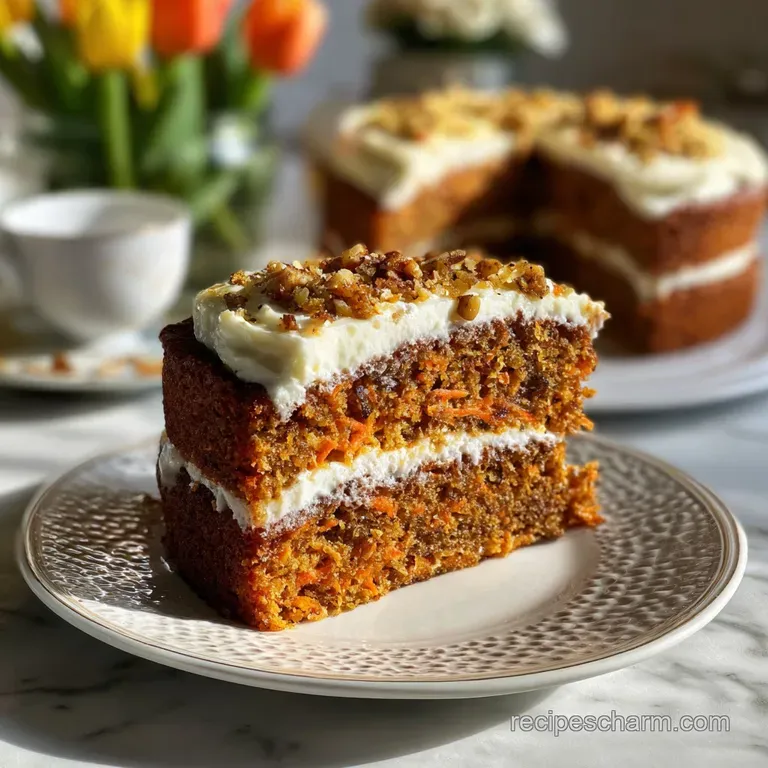
- Time: Active 30 minutes, Passive 40 minutes, Total 1 hours 10 mins
- Flavor/Texture Hook: Spiced, velvety crumb with a tangy, silken finish
- Perfect for: Milestone celebrations or high stakes dinner parties
- Master My Inventive Gluten Free Carrot Cake Recipe
- Why This Scientific Method Works
- Choosing The Best Recipe Elements
- Required Tools For Your Lab
- Detailed Steps For Baking Success
- Solving Common Baking Texture Issues
- Innovative Ways To Customize Results
- Scaling And Batch Adjustments
- Decoding Common Baking Misconceptions
- Storage And Zero Waste Ideas
- Presentation And Plating Techniques
- Recipe FAQs
- 📝 Recipe Card
Master My Inventive gluten-free Carrot Cake Recipe
The sharp, earthy aroma of freshly grated carrots always reminds me of my first major kitchen experiment. I was determined to prove that a gluten-free carrot cake recipe didn't have to taste like spiced sawdust or feel like a lead weight in your stomach.
I remember the rhythmic shatter of the carrots against the grater and the way the kitchen filled with the scent of toasted cinnamon as I adjusted the ratios of my 15th test batch.
It was a Saturday afternoon, and the light was hitting the flour dust in a way that made the whole process feel like a legitimate chemistry lab session.
We've all been there, staring at a crumbly, dry mess that looked great but lacked any soul. My goal was to move beyond "good for being gluten-free" and reach a level of decadence that makes people forget the flour blend entirely.
This version is the result of rigorous testing, focusing on how different fats and moisture releasing ingredients interact with rice based flours. We aren't just making a cake, we're engineering a sensory experience that balances spice, sweetness, and that essential velvety mouthfeel.
Forget the idea that you need wheat to get a proper rise or a tender bite. By understanding the physics of the ingredients, we can create a cake that stays moist for days. This recipe is for those who love the process as much as the result, those who want to know why we drain the pineapple but keep the carrots raw.
It's a calculated, deliberate approach to baking that yields a result so consistent, you'll find yourself making it even when you don't have dietary restrictions to worry about.
Why This Scientific Method Works
- Lipid Starch Interaction: The use of neutral oil instead of butter prevents the starches in the gluten-free flour from locking up when cooled. This ensures the cake remains soft even after being refrigerated.
- Enzymatic Tenderization: Crushed pineapple contains bromelain, an enzyme that helps break down the proteins in the eggs and almond flour. This process results in a significantly more tender crumb that doesn't crumble easily.
- Structural Reinforcement: The combination of super fine almond flour and xanthan gum mimics the elastic network of gluten. This traps the carbon dioxide from the leavening agents, allowing for a tall, airy rise.
- Hygroscopic Balancing: Using a mix of granulated and brown sugar manages the moisture levels within the batter. The brown sugar attracts and holds onto water, preventing the typical drying out seen in alternative flours.
| Preparation Step | Texture Impact | Flavor Profile |
|---|---|---|
| Hand Grated Carrots | Provides structural "bones" to the cake | Natural, earthy sweetness |
| Food Processor Carrots | Results in a denser, wetter crumb | Intensely concentrated carrot flavor |
| Pre Shredded Bagged | Can lead to a dry, woody texture | Muted, less vibrant spice notes |
Using fresh carrots is non negotiable for this level of baking. The moisture content in a freshly grated carrot is significantly higher than the bagged variety, which has often lost its cellular integrity.
This moisture is slowly released during the bake, acting as a secondary hydration source for the gluten-free flour blend.
Choosing The Best Recipe Elements
| Ingredient | Science Role | Pro Secret |
|---|---|---|
| Almond Flour | Provides fat and protein structure | Store in the freezer to prevent rancidity |
| Xanthan Gum | Acts as the "glue" or binder | Whisk thoroughly into dry ingredients first |
| Crushed Pineapple | Adds acidity and humectant properties | Drain until it no longer drips, don't squeeze |
| Neutral Oil | Lubricates the crumb for long shelf life | Avocado oil offers the cleanest flavor profile |
Choosing the right components is the foundation of any successful experiment. For the flour, I recommend a blend that uses a high ratio of superfine rice flour to prevent that "sandy" texture often found in cheaper mixes.
If your blend doesn't include xanthan gum, you must add it manually to ensure the cake doesn't turn into a pile of crumbs when you try to slice it.
- 250g gluten-free All Purpose Flour Blend (with Xanthan Gum): Why this? Provides the primary bulk and starch structure for the cake base.
- 100g Super Fine Almond Flour: Why this? Adds essential fats and proteins for a tender, moist crumb.
- 1 tsp Baking Soda: Why this? Reacts with the acidic pineapple for an immediate lift.
- 1.5 tsp Baking Powder: Why this? Ensures a secondary rise as the cake heats in the oven.
- 0.5 tsp Kosher Salt: Why this? Sharpens the sweetness and defines the spice profile.
- 2 tsp Ground Cinnamon: Why this? The primary aromatic driver for the traditional flavor.
- 1 tsp Ground Ginger: Why this? Adds a subtle heat that cuts through the sugar.
- 0.25 tsp Ground Nutmeg: Why this? Provides a deep, woody undertone to the spice mix.
- 240 ml Neutral Oil (Avocado or Grapeseed): Why this? Keeps the cake moist even when served cold.
- 4 large Eggs (Room Temperature): Why this? Creates a stable emulsion with the oil and sugars.
- 200g Light Brown Sugar (Packed): Why this? Adds molasses notes and retains moisture post bake.
- 100g Granulated White Sugar: Why this? Helps create a fine, crisp edge on the cake layers.
- 2 tsp Vanilla Extract: Why this? Enhances the perception of sweetness and depth.
- 300g Finely Grated Carrots: Why this? The star ingredient providing texture, color, and hydration.
- 120g Crushed Pineapple (Drained): Why this? Adds acidity for leavening and keeps the crumb soft.
- 100g Chopped Pecans or Walnuts: Why this? Contrast against the soft crumb with a fatty crunch.
- 450g Full Fat Cream Cheese (Softened): Why this? The base for a tangy, velvety frosting.
- 115g Unsalted Butter (Softened): Why this? Provides structure and a creamy mouthfeel to the icing.
- 480g Powdered Sugar (Sifted): Why this? Sweetens and thickens the frosting to a spreadable consistency.
- 15 ml Heavy Cream: Why this? Adjusts the final viscosity for a smooth finish.
- 1 pinch Salt: Why this? Balances the high sugar content in the frosting.
Required Tools For Your Lab
To execute this gluten-free carrot cake recipe with precision, you need the right gear. A digital kitchen scale is your most important tool; measuring by volume is far too inconsistent for gluten-free baking where a few extra grams of flour can turn a cake into a brick.
I also suggest using a stand mixer, such as a KitchenAid, to ensure the eggs and sugars are fully emulsified.
You will need two 23cm (9 inch) round cake pans. If you only have one, you'll have to bake in batches, but keep in mind that the baking soda will lose its potency the longer the batter sits. A sturdy box grater is essential for the carrots.
Don't use a food processor for the carrots if you want that specific "shatter" and distinct texture in every bite. Finally, an offset spatula will make frosting the layers much easier, giving you that professional, clean look.
Detailed Steps For Baking Success
- Prepare the environment. Preheat your oven to 175°C and grease two 23cm pans with oil, lining the bottoms with parchment paper. Note: Parchment is mandatory for gluten-free cakes as they are more fragile when warm.
- Sift the dry foundation. Whisk together the 250g gluten-free flour, 100g almond flour, baking soda, baking powder, salt, cinnamon, ginger, and nutmeg. until no lumps remain and the spices are evenly distributed.
- Emulsify the wet components. In your mixer, beat the 4 eggs with the 200g brown sugar and 100g granulated sugar for about 3 minutes until the mixture looks pale and slightly thickened.
- Integrate the lipids. With the mixer on low, slowly stream in the 240 ml of oil and the 2 tsp of vanilla extract. Note: This slow addition ensures a stable emulsion that won't separate during baking.
- Fold in the botanicals. Gently stir in the 300g grated carrots and 120g drained pineapple using a spatula. until the vegetables are fully coated in the egg mixture.
- Combine the masses. Add the dry ingredients to the wet in two batches, folding gently. Note: Over mixing isn't as much of a risk here as with wheat, but you want to keep the air you've beaten into the eggs.
- Add the texture. Fold in the 100g of chopped pecans. until they are evenly suspended in the batter.
- Execute the bake. Divide the batter evenly between the pans and bake for 35 to 40 minutes until a toothpick comes out clean and the edges pull away slightly.
- Engineer the cooling. Let the cakes rest in the pans for 15 minutes before inverting them onto a wire rack. Note: This rest period allows the internal steam to redistribute, preventing the cake from breaking.
- Construct the frosting. Beat the 450g cream cheese and 115g butter together, then gradually add the 480g powdered sugar and heavy cream until the texture is velvety and holds its shape.
Solving Common Baking Texture Issues
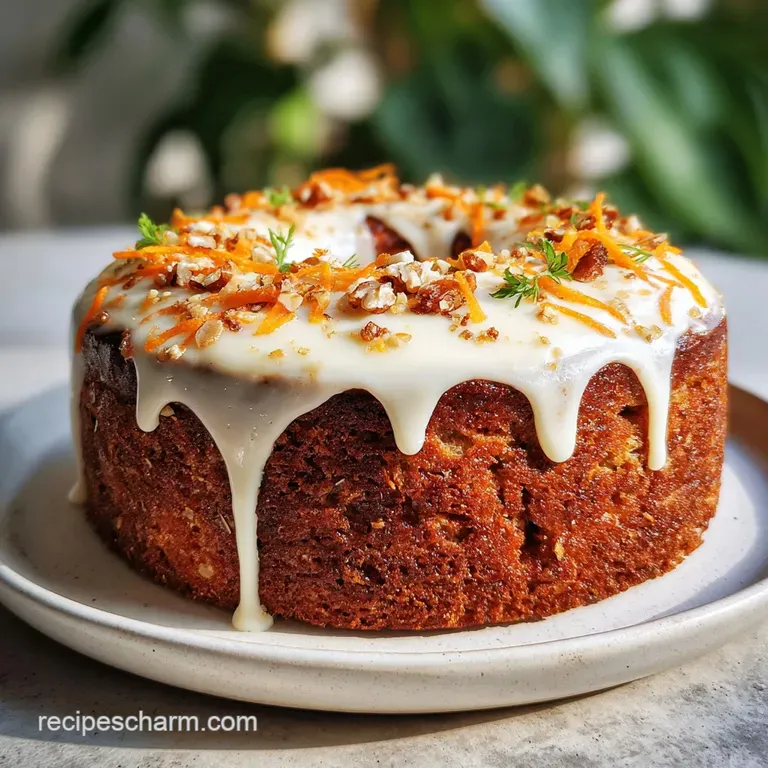
One of the biggest hurdles with a gluten-free carrot cake recipe is the dreaded gummy center. This often happens because the starches haven't reached a high enough temperature to gelatinize and set. If your cake looks done but feels rubbery, it’s likely underbaked in the middle.
Always use a thermometer to check; the internal temperature should reach about 98°C.
Another issue is the cake being too crumbly. This is usually a sign of insufficient binding. If you find your cake falling apart, you might need to increase the xanthan gum by a quarter teaspoon in your next attempt or ensure your eggs are truly at room temperature.
Cold eggs can cause the oil to seize, leading to an uneven distribution of moisture and structure.
Why Your Cake Sinks
A sinking center usually indicates that the structure collapsed before it could set. This can be caused by opening the oven door too early, which drops the temperature and shocks the rising batter. It can also happen if there is too much moisture from the pineapple or carrots, weighing down the air bubbles.
| Problem | Root Cause | Solution |
|---|---|---|
| Sunken Center | Excessive moisture or sudden temp drop | Drain pineapple thoroughly and keep the oven door closed |
| Gritty Mouthfeel | Poor quality flour blend or under hydration | Use superfine rice flour and let batter rest 10 mins before baking |
| Greasy Bottom | Broken emulsion during mixing | Add oil in a slow, steady stream while the mixer is running |
This recipe is a great alternative to other rich desserts, much like how my Hanky Panky Recipe offers a savory, crispy contrast for party platters. Both rely on a specific ratio of fats to achieve their signature textures.
- ✓ Always weigh your flour in grams rather than using cups to ensure accuracy.
- ✓ Ensure the cream cheese and butter are completely soft to avoid lumps in the frosting.
- ✓ Grate the carrots on the fine side of the grater for a more integrated texture.
- ✓ Let the cake layers cool completely in the fridge before frosting to prevent melting.
- ✓ Use a neutral oil like avocado or grapeseed to keep the spice flavors prominent.
Innovative Ways To Customize Results
If you want a deeper, more complex flavor, try "blooming" your spices. Heat the oil slightly and stir in the cinnamon, ginger, and nutmeg for 30 seconds before letting it cool and adding it to the batter. This releases the fat soluble flavor compounds, making the spices much more vibrant in the finished cake.
It's a small step that significantly changes the aromatic profile.
For those who enjoy a more tropical twist, you can replace half of the carrots with grated parsnips or even add a handful of toasted shredded coconut. If you are looking for a different kind of decadent treat that handles layers beautifully, you might also enjoy experimenting with my Banana Pudding Cheesecake Recipe, which uses similar structural principles to maintain its shape without a water bath.
Achieving a dairy-free Profile
To make this recipe entirely dairy-free, replace the butter in the frosting with a high-quality vegan butter stick and use a plant based cream cheese. For the cake itself, the oil already keeps it dairy-free. Just ensure your gluten-free flour blend doesn't contain any hidden milk powders.
Creating a Sheet Cake Version
If you prefer a single layer cake, you can bake the entire batter in a 9x13 inch pan. You will need to increase the baking time by about 10 to 15 minutes. This is a great option for casual gatherings where you want the flavor of a gluten-free carrot cake recipe without the fuss of stacking and leveling layers.
Scaling And Batch Adjustments
When cutting this recipe in half for a small 6 inch cake, the physics of the rise changes. You should reduce the baking time by about 20% and be very careful not to over mix the smaller volume of batter. For the eggs, if the math calls for a half egg, whisk one egg in a bowl and use exactly half by weight.
If you are doubling the recipe for a large party, do not simply double the salt and spices. I recommend using 1.5 times the amount of salt and 1.75 times the spices to avoid an overpowering flavor.
Large batches also benefit from being baked in separate pans rather than one giant deep pan, as the center of a very large gluten-free cake rarely sets properly before the edges burn.
Decoding Common Baking Misconceptions
There is a persistent myth that gluten-free cakes must be eaten immediately because they go stale within hours. This isn't true if you use the right fats. Oil based cakes, like this one, actually improve in texture after 24 hours as the moisture from the carrots and pineapple redistributes through the starches.
The xanthan gum also needs time to fully hydrate and set the structure.
Another misconception is that all gluten-free flour blends are interchangeable. Every brand uses a different ratio of rice flour, potato starch, and tapioca. A blend heavy on bean flour will taste savory and "beany," while one heavy on cornstarch may feel chalky.
For this specific cake, a rice and potato based blend provides the cleanest canvas for the spices and carrots to shine.
Storage And Zero Waste Ideas
Store this cake in the refrigerator due to the cream cheese frosting. It will stay fresh and moist for up to 5 days if kept in an airtight container. If you have leftover unfrosted layers, they can be wrapped tightly in plastic wrap and frozen for up to 3 months.
To thaw, leave them in the fridge overnight; this prevents a sudden temperature change that could cause the crumb to become soggy.
Don't throw away your carrot peels or the ends! You can simmer them with a bit of sugar and water to create a carrot simple syrup for cocktails, or even roast the peels with a bit of cinnamon and sugar for a crunchy snack.
If you have leftover frosting, it makes an excellent dip for apple slices or can be used as a filling for gluten-free graham cracker sandwiches.
Presentation And Plating Techniques
For a professional look, apply a "crumb coat" first a very thin layer of frosting that traps any loose crumbs. Chill the cake for 30 minutes before applying the final, thick layer of velvet cream cheese frosting. This ensures a clean, white finish without any orange specks peeking through.
Use your offset spatula to create swoops and swirls on the top for a rustic yet elegant feel.
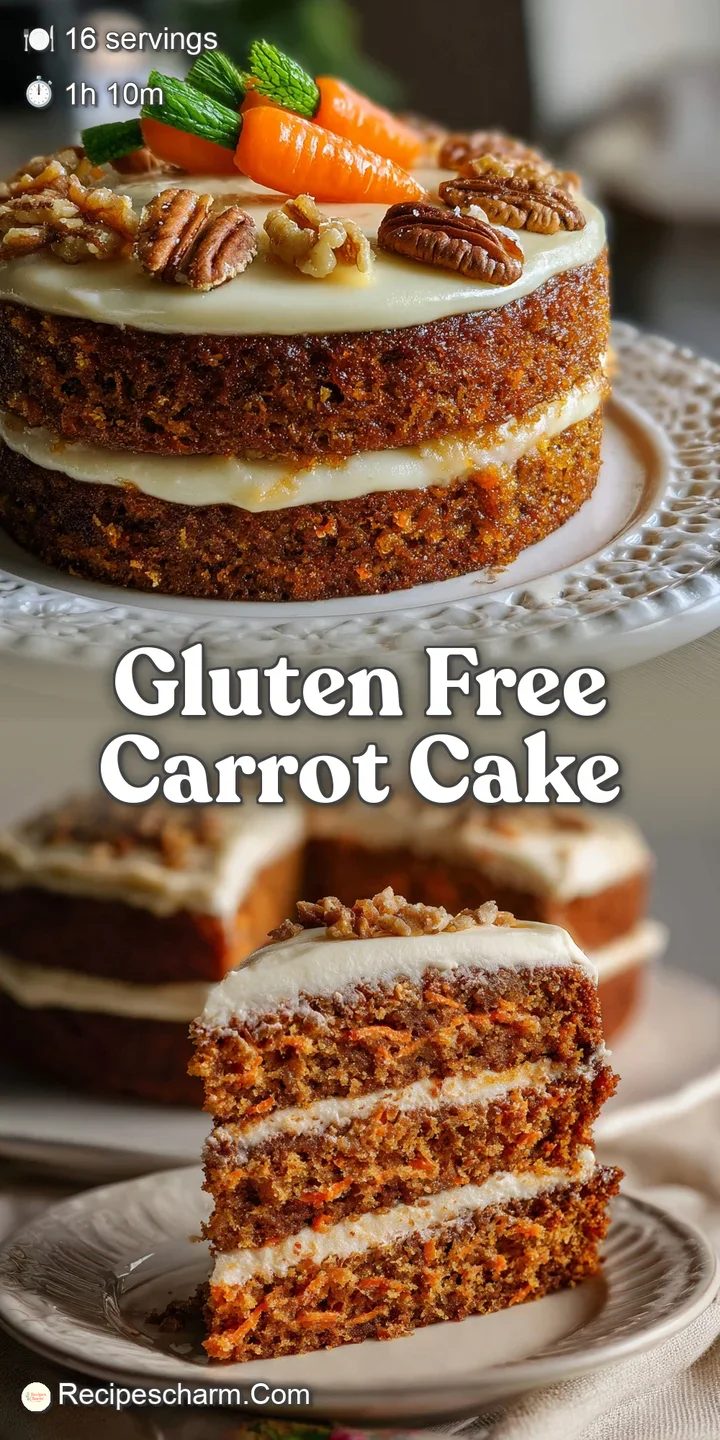
You can garnish the cake with extra chopped pecans around the base or create small carrot shapes out of marzipan. If you want to get really experimental, try crystallizing some thin strips of carrot in sugar syrup to use as a decorative nest on top.
When slicing, use a long serrated knife dipped in warm water and wiped clean between every cut to get those perfectly sharp, clean layers that show off the vibrant orange crumb.
Recipe FAQs
Can you use gluten-free flour in carrot cake?
Yes, absolutely. This recipe is specifically engineered to use a high-quality gluten-free blend, focusing on almond flour and rice flour ratios to replace the structure of wheat.
What makes a gluten-free cake moist?
Proper hydration and lipid balance. Utilizing oil instead of solid fat, and incorporating moisture releasing ingredients like crushed pineapple and fresh carrots, prevents the typical dryness found in alternative flours.
Why is it called divorce carrot cake?
No, this recipe is not inherently called "divorce carrot cake." That nickname usually refers to recipes that are so incredibly rich and tempting that they cause domestic arguments over who gets the last slice.
What is the secret to gluten-free baking?
Accurate measurement and structural binders. Always weigh your flours using a scale, and ensure you use a binder like xanthan gum to replicate the elasticity lost when removing gluten.
How to achieve a tender crumb without wheat?
Incorporate acidic, enzymatic fruit. The crushed pineapple in this recipe contains bromelain, which naturally tenderizes the proteins in the batter, resulting in a softer bite.
Should I use fresh or pre-shredded carrots?
Stick with fresh. Fresh carrots release superior moisture during the bake, which is critical for hydrating the starches in the gluten-free flour blend, leading to a better final texture.
How to stop the cake layers from crumbling when cooled?
Allow a proper resting period before inverting. Let the layers cool in the pans for exactly 15 minutes; this allows the internal structure to stabilize before they are exposed to ambient air.
gluten-free Carrot Cake
Ingredients:
Instructions:
Nutrition Facts:
| Calories | 618 kcal |
|---|---|
| Protein | 6.4 g |
| Fat | 37.5 g |
| Carbs | 68.4 g |
| Fiber | 3.2 g |
| Sugar | 52.1 g |
| Sodium | 388 mg |
