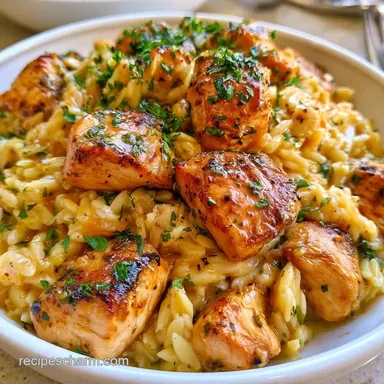
Healthy Protein-Rich Lemon Chicken Orzo
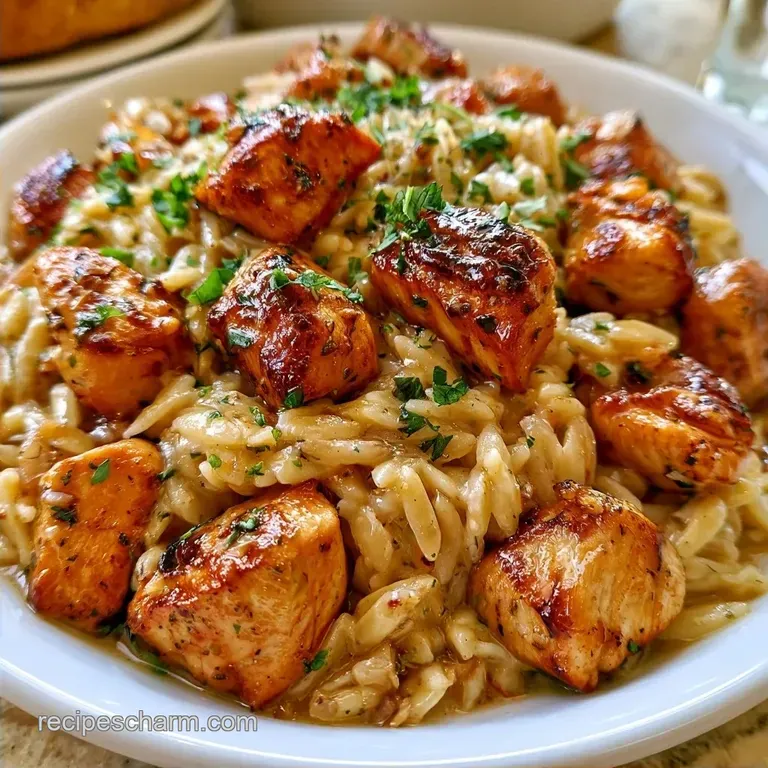
- Time: 10 min prep + 20 min cooking
- Flavor/Texture Hook: Tangy, creamy, and nutrient-rich
- Perfect for: Hectic weeknights or batch cooking
One Pan Chicken Orzo
The sound of cubed chicken hitting a screaming hot skillet is the best part of my evening. I used to struggle with this dish, often ending up with a pot of gummy, overcooked pasta that looked more like porridge than a meal.
The problem usually happened because I’d dump everything in at once, letting the pasta boil in a liquid that didn't have enough flavor or the right starch control.
This version fixes that by treating the pasta like risotto. By searing the meat and toasting the grains first, we build a base of deep flavor and ensure the pasta stays distinct. You'll get a meal that feels like a treat but only takes about 30 minutes from start to finish.
Whether you're feeding a hungry family or prepping for the week, this Chicken Orzo hits the spot. It's a high protein chicken orzo that doesn't sacrifice taste for nutrition. Trust me, once you try the toasting step, you'll never go back to the boil and drain method.
Why This Meal Works
- Toasting the Orzo: Sautéing the dry pasta in butter creates a nutty flavor and helps the grains hold their shape.
- Pan Fond: Searing the meat first leaves brown bits in the pan, which dissolve into the broth to thicken the Chicken Orzo sauce.
- Starch Control: Cooking the pasta directly in the broth releases natural starches, making the protein chicken orzo naturally creamy without needing heavy cream.
Recipe Specs
Here is how this approach compares to the traditional way of preparing pasta. While most cooks boil pasta in one pot and prepare sauce in another, the one-pan method is a huge advantage for cleanup.
| Method | Pots Used | Texture |
|---|---|---|
| Fast (One Pot) | 1 Pan | Creamier, starch rich |
| Classic (Separate) | 2 Pots | Lighter, distinct grains |
For anyone tracking their macros, this meal is a nutritional powerhouse. Per data from USDA FoodData Central, chicken breast is one of the best options for meeting protein targets without increasing saturated fat intake.
The Ingredient Lineup
Chicken Orzo is wonderful because it relies on a few simple pantry staples. I recommend using a wide skillet to ensure the liquid reduces uniformly, which avoids scorching the bottom while the top remains undercooked.
For the Protein & Searing 1.5 lb boneless, skinless chicken breasts, cubed Why this? Lean protein that sears quickly in small pieces 2 tbsp olive oil Why this? High smoke point, perfect for browning 1 tsp dried oregano
Why this? Adds earthy, Mediterranean flavor 1/2 tsp garlic powder Why this? Provides a consistent savory coating on the meat 1/2 tsp salt & 1/4 tsp black pepper
For the Aromatics & Base 1 medium yellow onion, finely diced Why this? Creates a sweet, fragrant foundation 3 cloves garlic, minced Why this? Adds a punch of fresh flavor 1.5 cups uncooked orzo pasta Why this? Rice-shaped pasta that helps thicken the sauce 1 tbsp butter Why this? Brings richness and helps toast the pasta 3 cups low sodium chicken broth Why this? The cooking liquid that seasons every grain
For the Simmer & Finish 2 tbsp fresh lemon juice Why this? Brightness that cuts through the richness 1 tsp lemon zest Why this? For a concentrated citrus scent 3 cups fresh baby spinach Why this? Adds vibrant color and a boost of iron 1/2 cup grated Parmesan cheese Why this? Adds salty depth and binds the sauce 1/4 tsp crushed red pepper flakes Why this? A hint of warmth to balance the lemon
Smart Ingredient Swaps
| Original Ingredient | Substitute | Why It Works |
|---|---|---|
| Chicken Breast | Turkey Breast | Similar lean profile. Note: Slightly drier texture |
| Orzo | Pearl Couscous | Similar size/shape. Note: Takes slightly longer to absorb liquid |
| Parmesan | Pecorino Romano | Same salty, hard cheese profile. Note: Stronger, tangier taste |
| Baby Spinach | Chopped Kale | Heartier green. Note: Needs 2 extra minutes to soften |
Necessary Kitchen Tools
No special equipment is required. The most important tool is a large, heavy-bottomed skillet with a snug-fitting lid. If the lid doesn't seal properly, the liquid will evaporate too quickly, resulting in crunchy pasta.
I generally prefer using a 12-inch pan made of cast iron or stainless steel. These materials retain heat far better than thin non-stick cookware, which is key for getting a golden crust on the chicken. You'll also need a sturdy spatula for stirring the orzo and a box grater if you're starting with a block of Parmesan.
Bringing It Together

Time to get started. Have your mise en place ready; once the pan is hot, the process moves quickly.
- Dry the chicken cubes with a paper towel and season with oregano, garlic powder, salt, and pepper. Note: Drying the meat ensures a better sear rather than steaming
- Get the olive oil shimmering over medium-high heat. Brown the chicken for 3-5 mins until edges are golden brown. Transfer the meat to a plate for now.
- Lower the temperature to medium and melt the butter into the remaining pan juices. Sauté the diced onion for 3 mins until translucent.
- Mix in the minced garlic and dry orzo. Stir constantly for 2 mins until the orzo smells nutty and turns light golden.
- Pour in the chicken broth and bring it to a light simmer. Fold in the lemon zest and red pepper flakes.
- Put a lid on the pan, drop the heat to low, and simmer for 8-10 mins until the orzo has absorbed most of the liquid and is tender.
- Put the browned chicken back into the pan. Stir in the Parmesan, lemon juice, and fresh baby spinach.
- Gently fold over low heat for 1-2 mins until the spinach is wilted and the sauce is velvety.
Chef Note: If the liquid evaporates too quickly before the pasta is cooked through, simply stir in an extra 1/4 cup of broth. Liquid absorption varies by brand.
Fixing Common Problems
Cooking Chicken Orzo in one pan is generally easy, but a few things can go sideways if you aren't watching the heat.
Fixing Dry Orzo
If the pasta feels hard or the pan looks dry, you've likely simmered it too long or your heat was too high. Stir in a small amount of warm broth or water, one tablespoon at a time, and cover it for another 2 minutes. This creates a steam chamber that softens the core of the grain.
Preventing Rubbery Chicken
Overcooking the meat is the biggest risk here. That's why we remove the chicken after the initial sear. By adding it back at the very end, the residual heat of the pasta warms it through without turning the cubes into rubber erasers.
Handling Separated Sauce
If the cheese clumps or the sauce looks broken, it usually means the pan got too hot when you added the Parmesan. Lower your heat to the absolute minimum before folding in the cheese and lemon juice. A gentle stir is all you need to emulsify the fats.
Perfect Side Pairings
Since this Chicken Orzo is so hearty, I like to pair it with something light and crisp to balance the richness of the butter and cheese. A simple arugula salad with a balsamic glaze works wonders.
If you're looking for a more substantial meal, some roasted carrots or asparagus add a nice sweetness. For those who want a different comfort food vibe on another night, you might enjoy my Chicken Pot Pie recipe, which uses a similar flavor profile but a flaky crust.
For a real feast, serve this with a side of crusty sourdough bread. It's great for soaking up any leftover lemon garlic sauce at the bottom of the bowl.
Saving Your Leftovers
Leftovers stay fresh for 3-4 days if kept in a sealed container in the refrigerator.
Reheating Tips: Since the orzo absorbs more moisture while chilling, it may thicken. To restore its original creamy consistency, stir in a bit of water or broth before warming it up on the stove or in the microwave.
Freezing: I suggest avoiding the freezer for this dish. The spinach often becomes slimy and the Parmesan may split. However, if you do freeze it, keep it for a maximum of 2 months and defrost it slowly in the refrigerator overnight.
Zero Waste: Make the most of your lemon. Once zested and juiced, freeze the peels for homemade cleaners or to flavor olive oil. You can also save onion scraps in a freezer bag to create your own vegetable stock.
Customizing Your Bowl
Chicken Orzo is incredibly versatile, allowing you to easily shift the flavor profile by adjusting a few key components.
- For a Creamier Finish: Fold in a tablespoon of heavy cream or a spoonful of Greek yogurt right before serving.
- For a Veggie Boost: Toss in frozen peas or diced zucchini during the final 5 minutes of simmering.
- For More Heat: Use a full teaspoon of red pepper flakes or stir in a spoonful of Calabrian chili paste.
- For Different Grains: If you're in the mood for variety, a Sausage Orzo Soup is a fantastic way to enjoy the same pasta in a different style.
Decision Shortcut
- For more protein: Stir in 1/2 cup of canned chickpeas while the pot simmers.
- For a tangier taste: Increase the lemon juice to 3 tablespoons and add a pinch of sumac.
- For a firmer bite: Cut the simmer time by 2 minutes, then let it sit covered for 5 minutes off the heat.
Protein Tweaks
To make this chicken orzo even leaner, you can replace the butter with a bit more olive oil. While you'll lose some of that signature nutty richness, the meal remains just as filling.
For a completely different protein, shrimp works beautifully; just stir them in during the last 3 minutes of cooking to ensure they don't overcook.
Common Kitchen Myths
There are a few things people tell you about cooking meat and pasta that just aren't true. Let's clear those up.
The "Seal In" Myth: Many people believe that searing chicken "seals in the juices." In reality, searing doesn't lock moisture inside. Moisture loss happens regardless of how you start. The sear is actually about flavor, creating a brown crust that makes the Chicken Orzo taste much deeper.
The Pasta Rinsing Myth: Some folks think you should rinse pasta to remove excess starch. For this recipe, that would be a disaster. We need that starch to create the creamy sauce. Never rinse your orzo if you want that luxurious consistency.
The Boiling Water Myth: You don't actually need to start pasta in boiling water if you're cooking it as a risotto or in a one pot meal. Starting the Chicken Orzo in warm broth and simmering slowly allows the grains to absorb the flavor of the stock rather than just water.
Right then, you've got everything you need to nail this dish. It's a budget-friendly, flavor packed meal that feels like it came from a bistro but takes less than half an hour. Whether you're sticking to the classic version or adding your own twist, this Chicken Orzo is a reliable winner for any night of the week.
Let's get cooking!
Recipe FAQs
How can I make this chicken orzo higher in protein?
Increase the amount of cubed chicken breast or add extra Parmesan cheese.
Tip: Use lean breasts for the highest protein-to-calorie ratio.
Are the ingredients in chicken orzo generally healthy?
This dish combines lean chicken, baby spinach, and lemon for a nutrient-dense meal.
Tip: Use low-sodium chicken broth to keep the salt levels manageable.
Is it true that orzo is part of an anti-inflammatory diet?
Surprisingly, no. Standard orzo is made from refined wheat, which is not typically featured in strict anti-inflammatory protocols.
Tip: Balance the pasta with extra baby spinach to add more antioxidants.
Why is my orzo turning out mushy?
Toast the uncooked orzo in butter for two minutes before adding broth to seal the starch.
Tip: Avoid over-stirring once the lid is on to prevent releasing too much starch.
What creates the creamy texture without using cream?
Cooking the pasta directly in the broth releases natural starches that thicken the liquid.
Tip: If you enjoyed mastering this starch-based thickening, the same principle applies to the filling in our stuffed peppers.
How do I reheat the leftovers?
Add a splash of chicken broth to the pan before warming over low heat.
Tip: Stir gently to avoid breaking the pasta grains.
Chicken Orzo: One-Pot and Creamy